
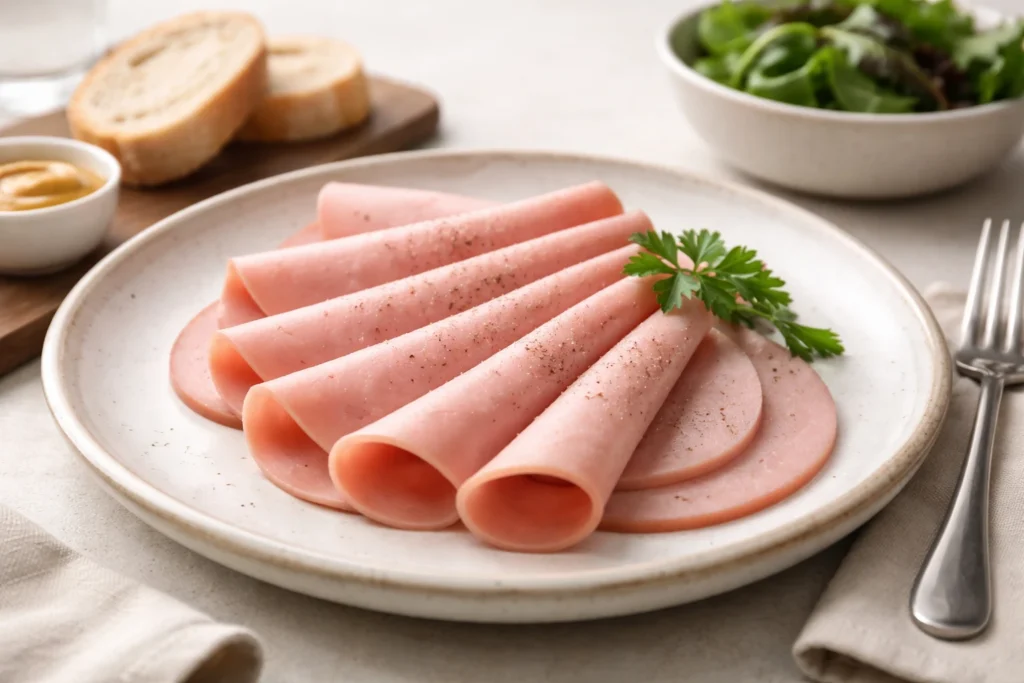
Bologna meat is a processed deli meat commonly found in sandwiches and ready-to-eat meals. It is made from finely ground meat that is seasoned, cooked, and formed into a uniform product before slicing.
The name “bologna” is historically linked to the Italian city of Bologna, where mortadella originated. Mortadella is a traditional Italian pork sausage, while modern bologna is a simplified industrial product and not a direct equivalent of the original.
Because bologna is created through processing rather than from a single recognizable cut of meat, its exact meat content can vary by brand and region, commonly using pork, beef, poultry, or blended meats.
Ingredients and Composition of Bologna Meat
Bologna meat is made using a combination of meat, water, salt, seasonings, and curing agents. These ingredients are selected to create a mild flavor, smooth texture, and long shelf life.
The meat used in bologna can vary depending on the product and brand. Common options include pork, beef, poultry such as chicken or turkey, or blended meats. The specific meat source is always listed on the ingredient label.
Water is added to control moisture and texture, while salt and spices provide basic flavor. Curing agents are used to preserve the meat and maintain color and shelf stability. These ingredients work together to produce bologna’s uniform consistency.
Because bologna is a processed food, there is no single standard ingredient list. Recipes differ by brand, region, and production method, which is why bologna products can vary in taste, texture, and nutritional profile.
Beef, Pork, and Modern Bologna Variations
Bologna is available in several meat-based variations. Some products are made entirely from beef, while others use pork, poultry, or a combination of meats.
The only reliable way to know which meat is used is to check the ingredient label. If a package simply says “bologna,” the meat source can vary. Some products clearly label themselves as beef bologna, pork bologna, or turkey bologna to avoid confusion.
So while beef is the traditional base, modern bologna does not belong exclusively to one animal in a broader meat context.
Popular International Bologna Meat Brands
There are several internationally recognized brands that produce bologna meat for global markets. These brands offer different variations made from beef, pork, poultry, or blended meats, depending on the specific product.
Well-known bologna brands such as Oscar Mayer, Hormel, and Boar’s Head are widely sold in North America and other international markets, with multiple bologna varieties clearly labeled by meat type.
Other international brands, including Bar-S, Armour, and Eckrich, also produce bologna in beef, pork, poultry, or mixed-meat varieties, often positioned as more affordable options.
Italian producers such as Levoni and Negroni continue to focus on traditional mortadella, as it is the original sausage historically linked to the city of Bologna, rather than producing modern American-style bologna.
Because the same brand may sell multiple bologna products made from different meats, checking the ingredient label remains the most reliable way to identify the meat source.
The Smooth Texture of Bologna
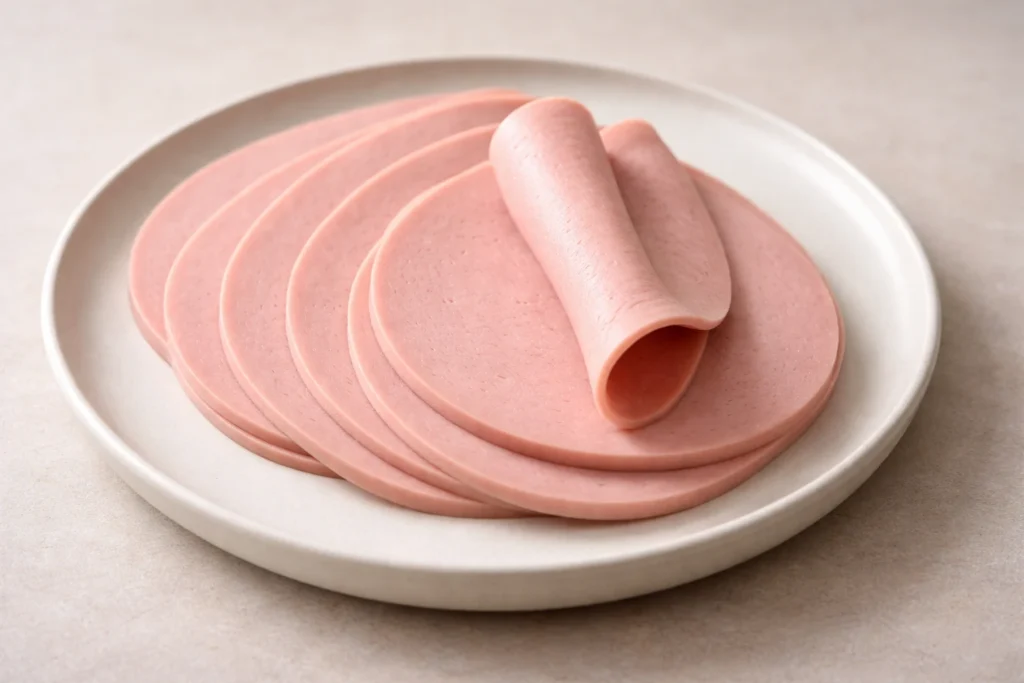
The smooth texture of bologna meat comes from how it is processed, not from the type of meat alone. The meat is ground extremely finely and blended into an emulsified mixture before cooking. This process removes visible muscle fibers and distributes fat evenly throughout the meat.
As a result, bologna does not have the coarse or chunky texture found in fresh sausages. Instead, it has a soft, uniform consistency that slices cleanly and evenly.
This texture is intentional and is one of the defining characteristics of bologna.
Bologna as a Processed Meat
Bologna is considered a processed meat. In this context, processing refers to meat that has been ground, mixed, seasoned, cured, and cooked before packaging. These steps are used to create a consistent texture, extend shelf life, and produce the uniform product commonly associated with bologna.
For storage timelines, see our guide on how long deli meat is good for and whether it can be frozen safely.
Processed does not automatically mean unsafe, but it does indicate that the meat has been altered from its original form. Bologna often contains added sodium and preservatives, which is why it is generally better suited for occasional consumption rather than daily use.
Understanding bologna as a processed meat helps set more realistic expectations about its nutritional profile.
Nutrition and Bologna
The nutritional value of bologna meat depends on the type of meat used and the specific recipe. In general, bologna provides protein and some essential nutrients found in meat. However, it can also be relatively high in sodium and fat, particularly in versions made with higher-fat cuts.
Poultry-based bologna, such as turkey or chicken, is often lower in fat than pork or beef versions, although sodium levels can still be high. Nutritional quality varies widely between products, which is why checking labels makes a difference.
In everyday eating, bologna is generally better viewed as an occasional option rather than a primary protein source.
You can also check our article, What Is the Healthiest Deli Meat? Ranked by Sodium and Processing.
Common Ways Bologna Is Eaten
Bologna meat is most often eaten cold in sandwiches, paired with bread, mustard, or simple vegetables. It may also be lightly fried or added to basic meals for convenience. Its mild flavor makes it appealing to people who prefer less seasoned or spicy foods.
Because it is already cooked, bologna requires little to no additional preparation, which helps explain its popularity as a quick and accessible option.
Bologna and Other Sausages
Although bologna is technically a type of sausage, it differs from many traditional sausages in texture and preparation. Most sausages retain visible meat structure and have a firmer bite. Bologna, by contrast, is fully emulsified, resulting in a much smoother and softer product.
Hot dogs are often compared to bologna because they use a similar emulsification process. In fact, the two are closely related, with differences mainly in shape, seasoning, and casing. Each style serves a different purpose, even when similar ingredients are used.
Another meat style that is often misunderstood for similar reasons is pastor meat, which is defined more by its preparation method than by the animal used. You can read more about this in our article on pastor meat.
Final Thoughts on Bologna Meat
Bologna meat is not a mystery food, nor does it come from a specific animal. It is a processed meat product defined by how it is made rather than what it is made from. Traditionally based on beef, modern bologna may include pork, poultry, or mixed meats, depending on the recipe.
Its smooth texture, mild flavor, and convenience help explain its lasting popularity. At the same time, understanding its processed nature allows people to make more informed choices about how often to include it in their diet.
Knowing what bologna meat really is helps clear up confusion and allows you to decide whether it fits your preferences and eating habits.
Learn more about Bologna on Wikipedia.
FAQ
Is bologna meat beef or pork?
Traditionally beef, but modern bologna may contain pork, poultry, or mixed meats.
Is bologna meat processed?
Yes, bologna is a processed meat that is ground, seasoned, cooked, and cured.
Why is bologna meat so smooth?
Its smooth texture comes from emulsification, where meat and fat are finely blended.
Can bologna be eaten raw?
Bologna is fully cooked during processing and is safe to eat cold.
Is bologna the same as hot dog meat?
They are closely related and use similar processing, but differ in shape and seasoning.