
Today, most people around the world can’t imagine a meal without meat. This habit seems natural, but it didn’t develop overnight. Meat’s role in the human food system has evolved from a matter of survival to a fundamental part of our diet.
First came hunting, then the development of preservation techniques, followed by trade, and finally, industrial production. This long journey has transformed meat from a simple food into a complete category, encompassing fresh meat, slow-cooked meat, processed meat, and various styles of preparation.
This article won’t cover basic things like “What is meat?” The focus is solely on how the meat system was created, how it evolved, and where the confusion we see today regarding processed, fresh, or style-based meat comes from.
Table of Contents
Early Human Diet and Meat Consumption
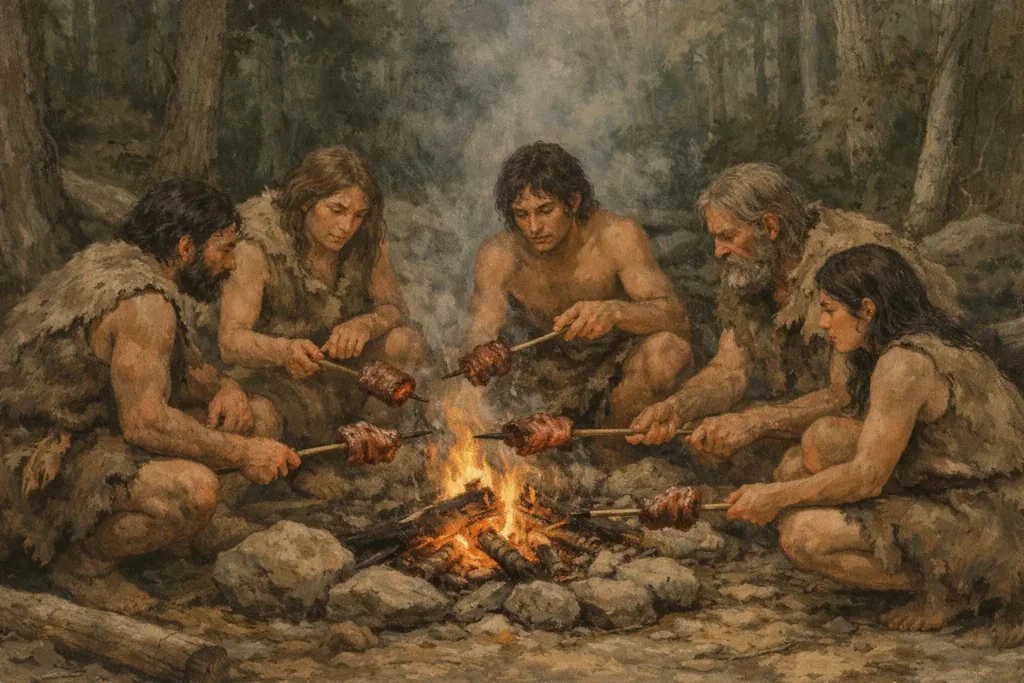
While meat may be considered a luxury or a separate category today, for early humans it was not just food but a tool for survival. Before agriculture existed, hunting-based food systems dominated daily life. Humans depended closely on their environment, and the meat of available animals directly provided energy and physical strength.
The biggest advantage of meat at that time was that it provided a lot of nutrition even in small quantities. Hunting was risky, but a successful hunt yielded a high reward. This is why meat became a powerful element in the human diet.
The discovery of fire marked a major turning point. The shift from raw meat to cooked meat was not only about taste. Cooking made digestion easier and reduced the risk of disease. As humans became more skilled with fire and tools, meat was no longer limited to immediate consumption.
Preservation instincts also began to develop from this point. When a hunt yielded a large amount of meat, the question arose of how to preserve it for later consumption. This thinking eventually formed the foundation of the entire meat processing system.
Meat Preservation Before Modern Times
Meat Preservation Before Modern Times
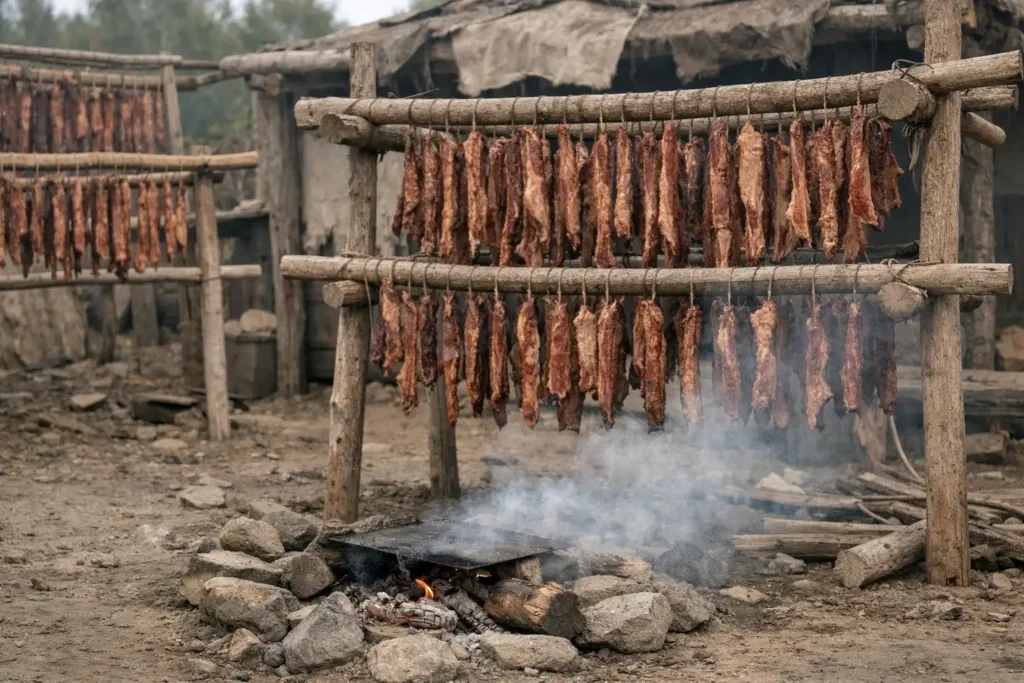
Before modern refrigeration, preserving meat was a skill, and every civilization developed methods according to their environment. Drying was the simplest technique. Meat was dried in the sun or open air to reduce moisture and prevent spoilage.
Salting made preservation even more effective. By slowing bacterial growth, salt allowed meat to last much longer. This method developed naturally in coastal and arid regions.
Smoking not only preserved the meat but also introduced flavor. The compounds in the smoke protected the meat and gave it a unique taste. The smoked meats that are popular today have their roots in this method.
Fermentation was a somewhat advanced concept. It involved allowing the meat to age in a controlled environment. This could be risky, but when done correctly, it made the meat long-lasting and more digestible.
The idea of processed meat originates here. Foods like bologna, salami, and deli meats, which may seem purely industrial today, are built on the same logic as ancient preservation practices. The difference lies mainly in scale and technology.
Meat in Agricultural and Trade Societies
When humans began domesticating animals, the role of meat became more organized. Meat was no longer just the result of hunting but became part of planned production. Livestock farming provided consistency, and meat availability became predictable.
At this stage, meat also became a symbol of wealth and status. Daily access to meat was not common, and special occasions, festivals, and celebrations often revolved around it. Meat appeared most abundantly on the tables of kings and the elite.
Regional preferences also became more pronounced during this period. Meat choices evolved based on climate, religion, and the animals available locally. In some regions, beef dominated, in others, lamb or pork, while poultry became more common elsewhere.
Butchers and meat markets transformed meat into a profession and a trade. It was no longer just food but became a part of the economy. Concepts like cuts, portions, and pricing were formalized here.
Industrialization and Mass Meat Production
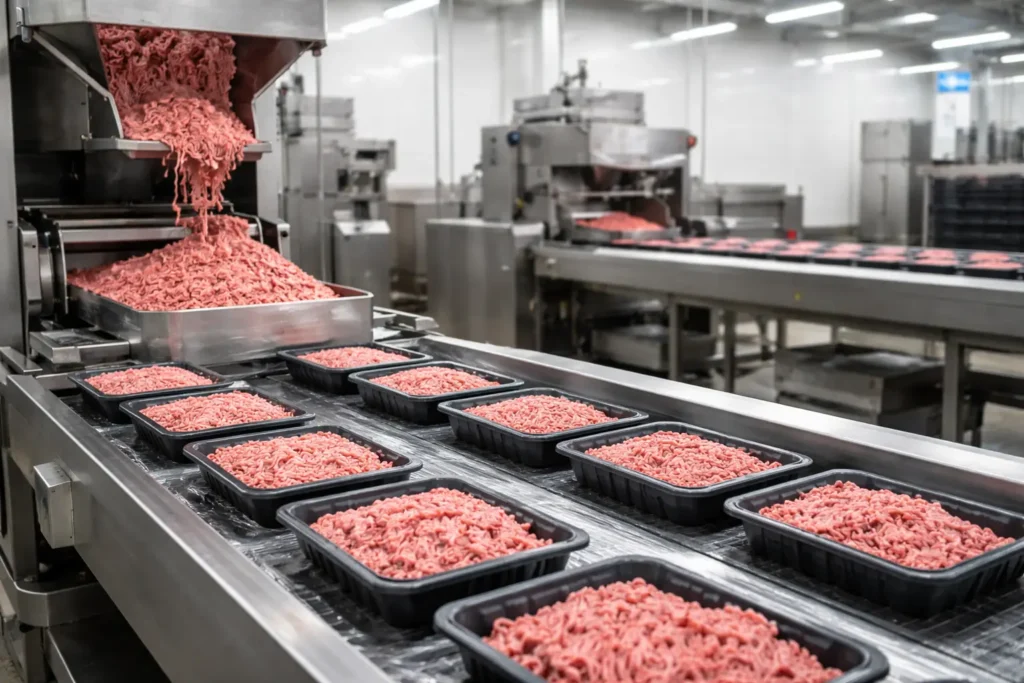
The Industrial Revolution completely transformed meat production. Production was no longer limited to local markets. Machines made processes like grinding, mixing, and emulsification possible. The texture of the meat became uniform, which was not possible with previous manual methods.
Shelf life became a major focus here. For feeding urban populations, it was essential for meat to remain safe for longer periods. This led to the development of preservatives, packaging, and standardized recipes.
This is where modern processed meats became mainstream. Products like sausages, bologna, and deli meats are a result of industrial efficiency. These meats are based on traditional preservation methods, but the scale and control are modern.
At this stage, meat became a system where consistency and availability became more important than taste.
Meat Styles vs Meat Sources
As cultures mixed and migration increased, a new concept began to take shape: style-based meat. The focus gradually shifted from the animal itself to the method of preparation.
The same cooking styles started to be applied to different animals. Techniques such as slow cooking, marination, and spit roasting spread across regions and cultures. This is why today a single preparation style can appear across multiple types of meat.
Pastor and Birria fit naturally into this pattern. These names do not point to specific animals but to preparation methods and flavor profiles. As these styles traveled across regions, they adapted to locally available meats.
Seen through a historical lens, this distinction becomes clear. The preparation style and the meat source developed as separate ideas, even though they are often discussed together today.
Meat in Modern Everyday Eating
Today, meat is available at every level of everyday food. Home cooking includes everything from fresh cuts to pre-marinated packs, while restaurants offer both traditional slow-cooked dishes and faster, modern preparations.
Ready-to-eat meats have made convenience a priority. In increasingly busy lifestyles, saving time matters, which helps explain the popularity of processed and pre-cooked options.
At the same time, tradition has not disappeared. Slow cooking, regional recipes, and culturally rooted meat dishes continue to hold their place. In modern food culture, convenience and tradition exist side by side.
How Meat Became a Category, Not a Single Food
Meat is no longer a single food. As the human food system grew more complex, meat also became a broad category in which different forms and classifications naturally developed.
Initially, meat existed only in its fresh form. The meat obtained after animal slaughter was cooked immediately. At this stage, meat didn’t need any categorization, because production was limited and consumption was immediate.
As preservation and storage techniques developed, the concept of slow-cooked and preserved meats emerged. Some meats were cooked for extended periods, while others were dried or smoked for storage. At this point, the identity of the meat began to shift from its source to the method and handling techniques used.
In the later stages of this evolution, it became necessary to clearly classify meat. For large-scale production, markets, and labeling, meat had to be understood in terms of groups. This is where terms like “red meat” and “white meat” became meaningful.
Red meat
The concept of red meat developed when some meats were observed to be denser, darker, and to have different cooking characteristics. These meats generally took longer to cook and were handled differently in the industrial supply chain. Therefore, they were placed in a separate group, which later came to be known as red meat.
Animals such as lamb fall into this red meat category because of their density, color, and cooking characteristics.
White Meat
The concept of white meat also arose from this practical need. Meats like poultry had a lighter texture, cooked more quickly, and could be easily scaled up in mass farming. Giving them a separate category was convenient for production, storage, and cooking. The color was merely a visible indicator; the real reason was the need for the food system.
Processed Meat
Processed meat is the next logical step in this categorization. It’s not defined by a single animal or color. The focus of processed meat is on preservation, shelf life, and consistency. When ancient drying, salting, and smoking techniques were replaced by modern machinery, grinding, and emulsification, processed meat became a distinct category in the food system.
Deli products like bologna meat are part of this processed meat category, where the meat is ground, mixed, and emulsified to create a uniform texture and longer shelf life.
Style-Based Meat
In parallel, a style-based approach to meat also developed, one that does not necessarily follow red, white, or processed classifications. Here, identity comes not from the animal itself but from cooking methods, marination, and cultural techniques. This is why the same style can exist across different types of meat.
Dishes like pastor meat and birria meat are not defined by a single animal, but rather by their cooking style, marination, and cultural background.
In the same way, fish meat is treated as its own category, shaped by different biology, handling methods, and cooking traditions.
Today, when we talk about meat, we are referring to a broad category that includes fresh meat, slow-cooked meat, red meat, white meat, processed meat, and meat prepared in various styles. Without understanding meat as a layered system, labels tend to oversimplify, and meat is often judged without considering how it is produced or prepared.
Final Verdict: Why Understanding Meat History Matters Today
Knowing the history of meat is not just about learning facts. It helps in everyday choices. When you read a label, you can understand the context from which the product originated.
The difference between processed and fresh meat is not merely a result of modern marketing but the outcome of centuries of evolution. The mistake of understanding style-based meat as its source is avoided when history is clearly understood.
Today, when there are so many meat options, historical context provides clarity. It shows that what we see on our plate is not just food but the final form of a long human journey.
For a broader historical context, you can refer to the overview on Wikipedia.