
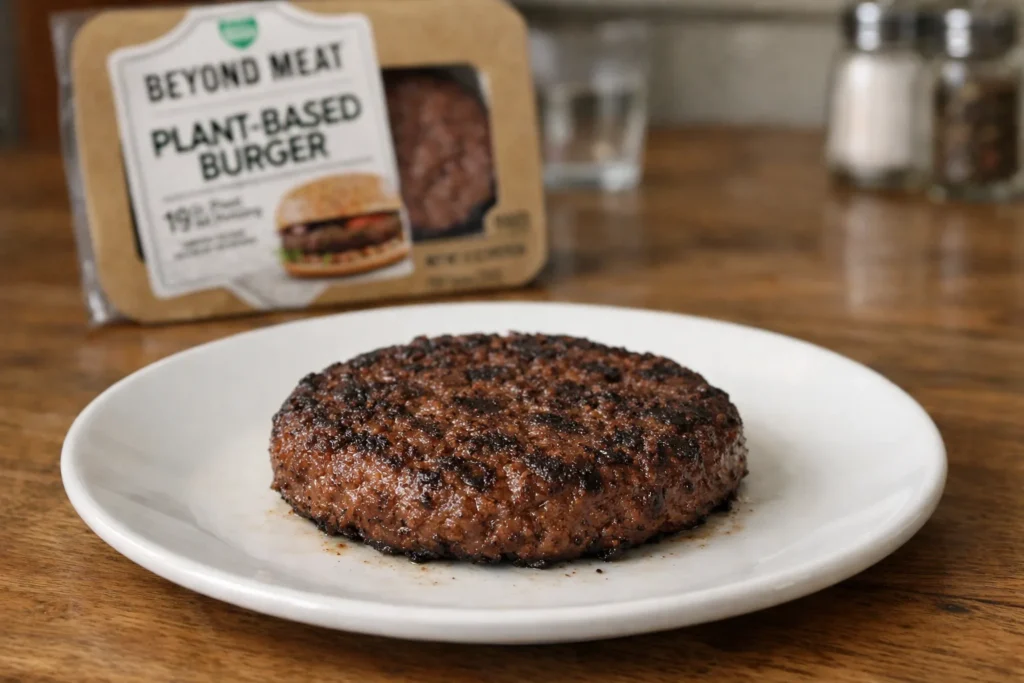
Beyond Meat is a plant-based food product that appeals to people who enjoy the taste and texture of meat but choose not to consume animal-based foods. It is designed to be cooked, served, and eaten in much the same way as meat, while being made entirely from plant-derived ingredients.
It is neither traditional vegetarian food nor animal meat. Instead, it is a separate category of food created to fit into meat-style meals such as burgers, sausages, and ground-meat dishes.
Table of Contents
Ingredients Used in Beyond Meat
Beyond Meat is made using plant-based ingredients that are combined to reproduce the texture and cooking behavior of meat.
The primary protein source is pea protein, chosen for its neutral taste and ability to create a firm, meat-like structure that can be shaped into patties or minced forms.
In some products, ingredients like rice or mung beans are also used to support texture and consistency.
Vegetable oils are another key component. They help create juiciness and mouthfeel when the product is cooked. Coconut oil and canola oil are commonly used to imitate how animal fat behaves during heating.
Binders and starches are added to hold the ingredients together. They help the product keep its shape while cooking and prevent it from falling apart. Natural flavors and seasonings are then used to build a savory taste similar to cooked meat.
Coloring ingredients derived from plants are used to give the product a meat-like appearance, both before and after cooking. These ingredients are selected to react to heat, allowing the color to change as the product cooks.
Beyond Meat does not use animal-derived ingredients such as eggs, dairy, or meat extracts.
Origin of Beyond Meat
Beyond Meat was founded in the United States in 2009. The company was created with the idea of producing meat-like food using plants instead of animals. From the beginning, the focus was not on making vegetables taste better but on recreating the experience of eating meat.
The company gained attention as plant-based eating started becoming more common, especially among people who were reducing meat consumption rather than fully eliminating it. Beyond Meat products were developed to look and behave like meat so they could be used in familiar dishes without changing cooking habits.
As the brand grew, Beyond Meat expanded its product range and moved into restaurants, fast-food chains, and grocery stores.
Manufacturing and Factory Production
Beyond Meat products are manufactured in food processing facilities rather than traditional meat plants. These facilities are designed to handle plant-based raw materials and convert them into finished meat-style products.
The production process involves mixing plant ingredients such as proteins, oils, binders, and flavoring components into a uniform mixture. This mixture is then shaped into formats like patties, sausages, or ground products.
Temperature control and mechanical processing play an important role in production. These steps help create the fibrous texture that gives Beyond Meat its meat-like bite. Once shaped, products are cooked or partially cooked, then cooled and packaged.
The company operates manufacturing facilities in multiple locations to support regional supply. Production sites exist in the United States, with additional facilities established internationally to serve global markets.
All production follows standard food safety regulations applied to packaged food products.
Countries Where This Product Is Available
Beyond Meat originated in the United States but is now available in many countries. In North America, its products are widely sold through grocery stores, restaurants, and fast-food chains. The United States remains the company’s largest market.
Beyond Meat has also expanded into Europe, with availability in countries such as the United Kingdom, Germany, France, and the Netherlands. In these regions, products are sold through supermarkets and food service providers.
The company has entered parts of Asia as well, including East and Southeast Asia, where demand for plant-based meat has been growing, particularly in urban markets.
Availability varies by country based on regulations, partnerships, and local demand. As a result, not all Beyond Meat products are sold in every market.
Ownership and Company Leadership
Beyond Meat is a publicly traded company. This means it is owned by shareholders rather than a single individual or family.
The company was founded by Ethan Brown, who played a key role in shaping its early direction and product focus. Leadership and ownership are now shared among investors, board members, and institutional shareholders.
As a public company, Beyond Meat operates under corporate governance rules and publishes financial and operational reports. This structure separates product development from individual ownership and places decision-making at the company level.
How Beyond Meat Is Used
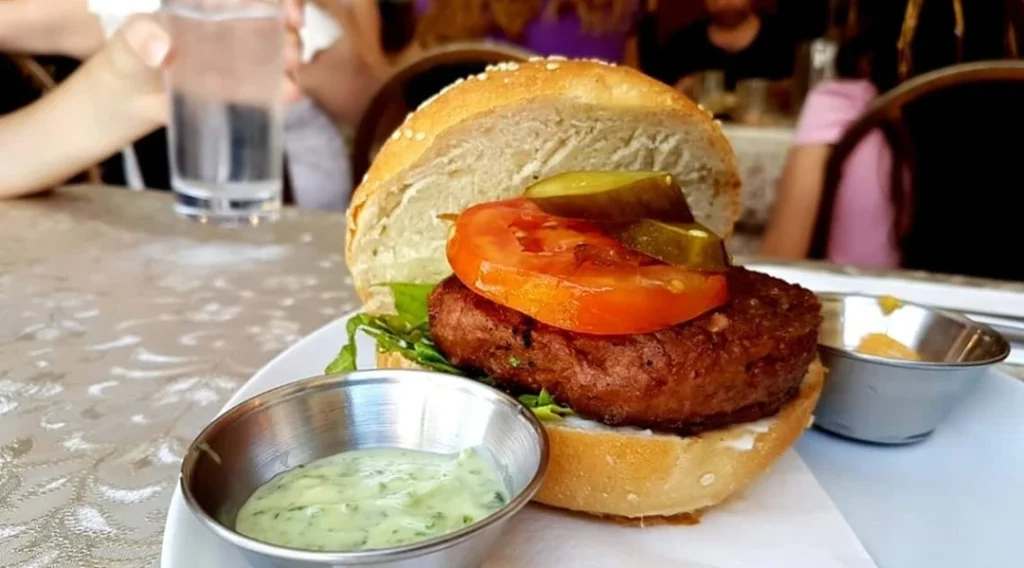
Photo by Ofer Kor / Wikimedia Commons (CC BY-SA 4.0)
Beyond Meat products are designed to be used in the same way as animal meat. Burger patties can be grilled or pan-fried, ground products are used in tacos, wraps, and sauces, and sausages are cooked and served like traditional sausages.
The product is not intended to replace traditional vegetarian dishes such as lentils, beans, or vegetables. Instead, it is meant to replace meat in dishes where meat is usually the main component such as gyro meat.
Because of this positioning, Beyond Meat is often placed in the meat section of grocery stores rather than alongside vegetables.
Beyond Meat in the Modern Food System
This makes more sense when seen in the context of meat history.
Beyond Meat fits into a specific category of modern food. It is not animal meat, and it is not a whole plant food either. It is a processed, plant-based product created to behave like meat during cooking and eating.
Seeing this type of product as its own category helps set realistic expectations. It is designed to look, cook, and taste similar to meat while being produced from plant ingredients through controlled manufacturing processes. Its purpose is functional rather than traditional.
This approach represents one way of maintaining meat-style eating without using animals. It exists alongside traditional meat, reflecting how the modern food system has expanded to include multiple options rather than replacing one with another.
For general reference, see Wikipedia.