
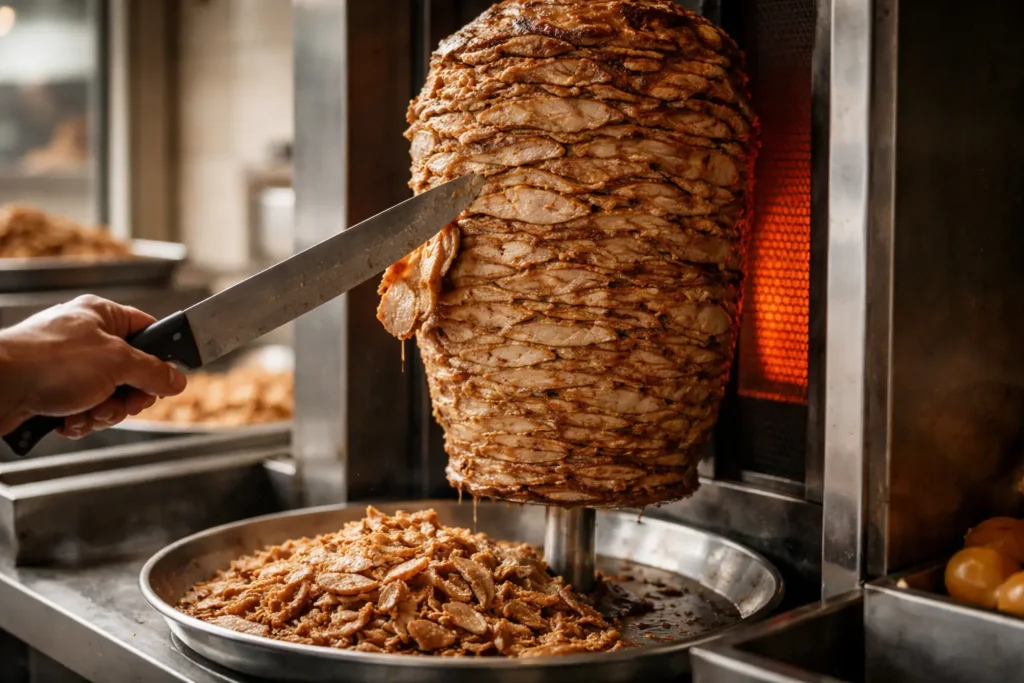
Shawarma meat is thinly sliced meat that is marinated with spices, stacked tightly, and slow-cooked on a vertical rotisserie. The rotating heat cooks the meat evenly and allows it to be shaved layer by layer, which gives shawarma its soft texture and slightly crispy surface.
This style of cooking comes from the Middle East, where lamb, beef, or chicken is traditionally used depending on the region. The combination of marination, fat layering, and vertical roasting is what separates shawarma meat from kebabs or regular roasted meat.
Origin of Shawarma Meat
Shawarma meat originated in the Eastern Mediterranean region, particularly areas that today fall under the cultural region known as the Levant. Countries such as Lebanon, Syria, and Turkey played a major role in shaping what we now call shawarma. The technique itself developed during the time of the Ottoman Empire, when cooks experimented with vertical roasting instead of horizontal spit roasting.
The word “shawarma” comes from a Turkish root meaning “to turn” or “to rotate,” which directly describes how the meat cooks. Instead of lying flat over fire, stacked meat rotates slowly in front of a heat source. This method allowed large amounts of meat to be cooked evenly while staying moist, making it ideal for busy markets and street vendors.
Over time, shawarma spread across the Middle East and later to Europe, North America, and Asia. As it traveled, local preferences influenced meat choices and spice blends, but the core idea remained the same: thinly sliced meat, marinated, stacked, and roasted vertically.
In nearby Mediterranean regions, this technique also inspired similar dishes, such as gyro meat, which developed its own identity within Greek cuisine.
Type of Meat Used in Shawarma
Traditional shawarma meat depends heavily on region and cultural preferences. Lamb was one of the earliest meats used, especially in areas where sheep farming was common. Lamb shawarma has a rich flavor and slightly fatty texture that works well with slow roasting.
Beef became more common as shawarma spread into urban areas and international markets. Beef shawarma is firmer than lamb and is often mixed with lamb fat to prevent dryness. In many restaurants today, beef and lamb are combined to balance flavor and texture.
Chicken shawarma is a later adaptation but is now extremely popular worldwide. Chicken thighs are usually preferred over breast meat because they remain juicy during long cooking. Chicken shawarma has a lighter taste and absorbs spices quickly, which makes it suitable for fast preparation in high-volume kitchens.
In some regions, especially in Turkey, a version closely related to shawarma uses veal. Pork is generally not used due to religious dietary rules in most shawarma-origin regions, although pork-based versions may exist in non-traditional settings outside the Middle East.
How Shawarma Meat Is Prepared
Shawarma meat preparation begins long before cooking. Raw meat is sliced thin and marinated for several hours, sometimes overnight. The marinade typically includes oil, salt, garlic, vinegar or lemon juice, and a spice mix that may contain cumin, coriander, paprika, black pepper, cinnamon, or allspice. The exact blend varies by region and vendor, and many recipes are kept as family secrets.
After marination, the meat slices are stacked tightly onto a long vertical skewer. Fat is often layered between slices, especially when using lean meats, to keep the stack moist during roasting. The stack can weigh several kilograms and is shaped into a cone so that it cooks evenly from top to bottom.
Shawarma Cooking Method
Shawarma meat is cooked on a vertical rotisserie positioned close to a gas or electric heat source. As the stack rotates slowly, the outer layer browns and crisps while the inside remains raw and continues cooking gradually. This layered cooking process is essential to shawarma’s texture.
When the outer surface is fully cooked, the vendor shaves off thin slices using a long knife. The exposed inner layer then continues roasting, allowing fresh meat to be carved repeatedly throughout the day. This method keeps the meat hot, tender, and freshly cooked without drying it out.
Unlike oven roasting or pan frying, shawarma’s vertical cooking allows excess fat to drip away while still basting the meat naturally. This balance creates meat that is flavorful but not greasy, with crisp edges and a soft interior.
Serve
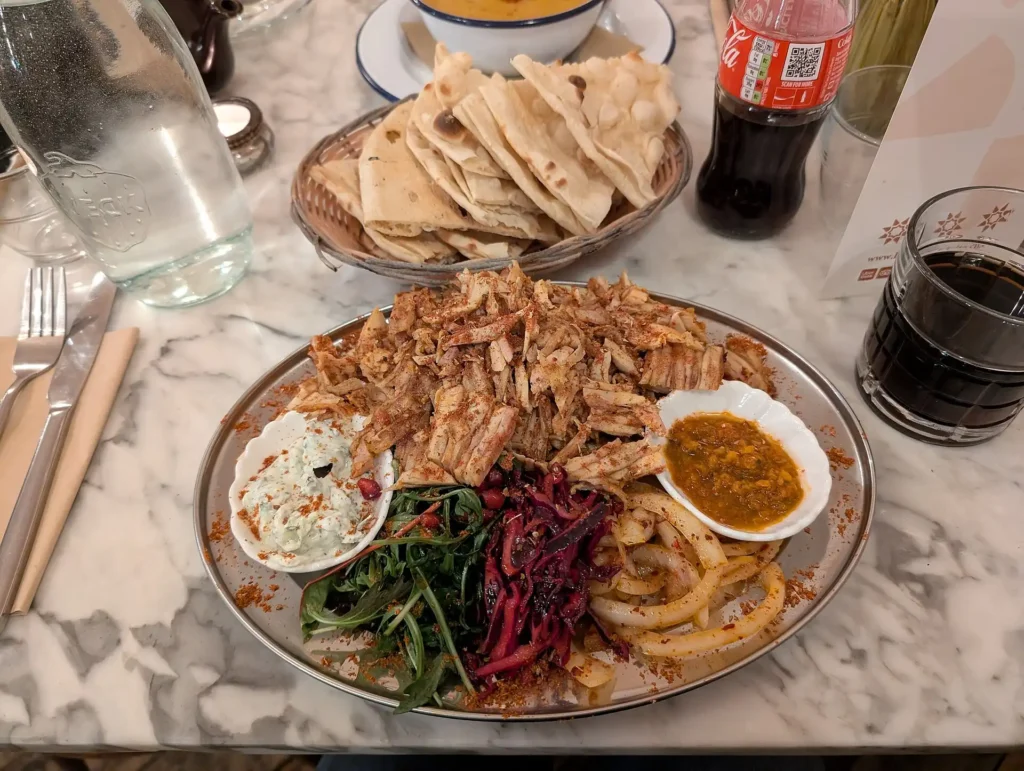
Once shaved, shawarma meat is usually served immediately. It may be wrapped in flatbread, stuffed into pita, or plated with rice. Common accompaniments include garlic sauce, tahini, pickles, onions, and fresh vegetables. The meat itself is the focus, while sauces and sides support its flavor rather than overpower it.
Shawarma meat is rarely eaten plain. Its seasoning is designed to work with bread and sauces, which is why it may taste overly intense on its own but perfectly balanced in a wrap or sandwich.
Final Thoughts
Shawarma meat stands out because it is defined by a cooking tradition rather than a single recipe or ingredient. The vertical roasting method, combined with gradual cooking and fresh slicing, gives the meat a texture and flavor that is hard to achieve with ordinary cooking styles.
Because the technique adapts easily to different meats and local tastes, shawarma has traveled far beyond its place of origin without losing its identity. This balance between tradition and flexibility is what keeps shawarma meat relevant, recognizable, and widely enjoyed around the world.
Learn more about shawarma