

Some people prefer fish, others prefer meat. This often leads to debates about which is healthier. Fish lovers say it’s lighter and easier on the body, while meat lovers argue that it provides strength. When the question comes up, is fish healthier than meat? The answer isn’t that simple.
Health isn’t decided by a food’s name alone. Portion size, cooking method, frequency, and overall diet patterns matter more. Still, there are real differences between fish and meat that are worth understanding.
Why is fish considered healthy?
Fish is often seen as a heart-friendly option. This is because many types of fish, such as salmon, sardines, mackerel, and trout, contain fats that are considered beneficial for the body. People generally report feeling less heavy and having a relatively smooth digestion after eating fish.
Fish is often recommended by doctors as an alternative to red meat, especially when heart health is a concern. Over time, this has created the impression that fish is a “cleaner” protein source. As a result, many people automatically assume that fish is healthier than meat.
Is it correct to call meat unhealthy?
When people talk about “meat,” they usually mean red meat. Red meat is often seen as heavier, and excessive consumption has been linked to health concerns in several studies. This is one reason people tend to place meat below fish when comparing healthfulness.
But meat is a broad category. Chicken, turkey, and lean cuts have very different nutritional profiles. Skinless chicken breast, for example, is considered a very lean protein source and is commonly used in fitness-focused diets. Because of this, grouping all meat together and calling it unhealthy can be an oversimplification.
The impact of meat depends on quantity and frequency. Occasionally, moderate amounts of properly cooked meat can be part of a well-balanced diet.
Protein Content: Is Fish Better?
If the focus is only on protein, both fish and meat are strong sources. Most common fish and lean meats do not differ much in overall protein content, and both can support muscle building or fitness goals.
The difference mostly comes from the nutrients that accompany the protein. Fish provides certain healthy fats, while meat tends to offer higher amounts of iron and B vitamins. Which option works better depends on individual goals.
For those looking for a lean, high-protein option, both chicken and white fish are practical choices. There isn’t a clear winner between the two.
Also read: Is fish healthier than chicken?
The Real Difference in Fat Types
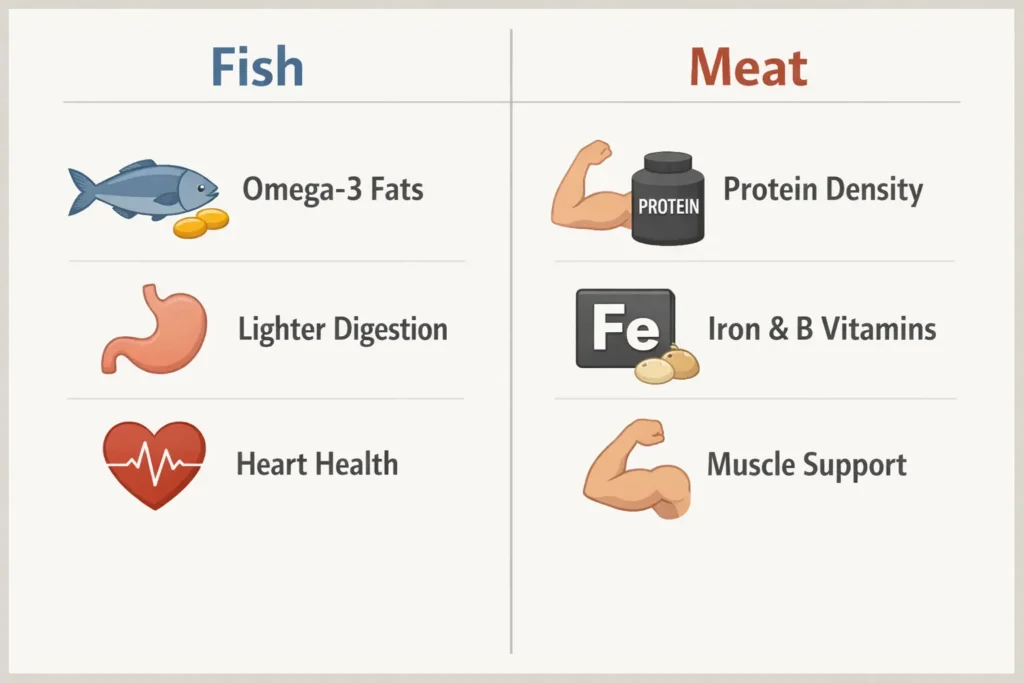
This is where fish can have a slight edge. Fatty fish contain omega-3 fatty acids, such as EPA and DHA, which are considered beneficial for heart health. For this reason, many dietary guidelines encourage fish consumption.
Red meat is high in saturated fat, which is not ideal in excessive amounts. However, lean meat cuts, such as lean beef or skinless chicken breast, have more controlled fat content. Because of this, grouping all meats into the same category is not accurate.
If the question is specifically about heart health, fish, especially fatty fish, is generally considered a safer choice. But when meat is consumed in its lean form, the difference is not as extreme as it is often portrayed in debates.
The Effect of Cooking Method
This part of the comparison is often overlooked. Fried fish isn’t healthy just because it’s fish. And grilled chicken isn’t unhealthy just because it’s meat. The method of preparation significantly affects the result.
High oil, heavy batter, processed forms, these can make any protein source less healthy. Simple cooking methods like grilling, baking, or steaming minimize the difference. So, when people ask, “Is fish healthier than meat?” cooking style can’t be ignored.
In real life, people don’t always make ideal food choices. Fried versions often replace plain preparations, which affects the conclusion.
In the context of weight loss,
Calorie balance is the primary factor for weight loss. Lean chicken and white fish can both be low-calorie, high-protein options, which makes the difference between fish and meat less important here.
Fatty fish contains slightly more calories, but it is also more nutrient-dense. When portions are controlled, it can still fit into a weight loss plan. Even in this case, extreme approaches rarely help.
Eating only fish will not automatically lead to weight loss, and eating only meat will not guarantee weight gain. The overall diet pattern plays a much bigger role.
Budget and Accessibility Factor
The practical side should not be overlooked. In many places, fish is relatively expensive, while chicken remains a more accessible and affordable option. A sustainable diet is one that can be followed long-term.
If someone cannot afford fish regularly, it does not mean their diet becomes unhealthy. Lean meat can also fit into a balanced eating pattern. Health does not depend on a single food choice.
You can also read, is fish meat or seafood?
Final Verdict: Is Fish Healthier Than Meat?
So, is fish healthier than meat? In many situations, yes, especially when heart health or fat quality is the main concern. But this does not mean meat is unhealthy or should be avoided. Lean cuts and properly cooked meat can still be part of a balanced diet.
Healthy choices are not decided by a single winner. Variety, moderation, and cooking method matter more. Both fish and meat are useful protein sources in their own way.
So the simple answer to the debate is this: context matters. When goals are clear and portions are controlled, both fish and meat can fit into a healthy diet. A balanced approach is more practical than extreme thinking.