
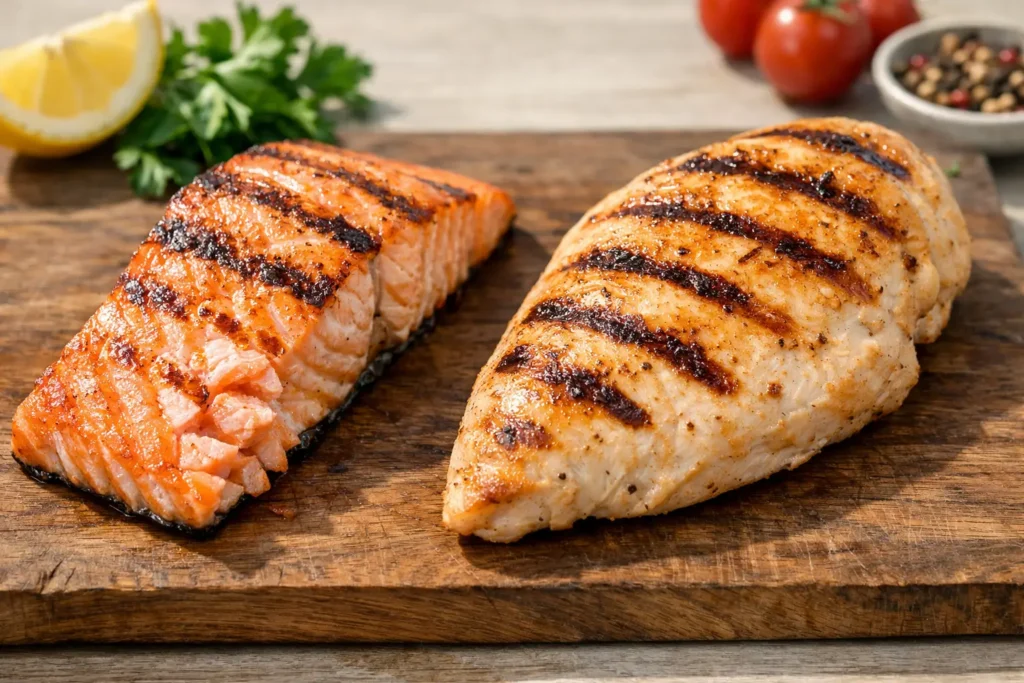
Some people prefer fish, while others prefer chicken. Both are common protein sources and are generally considered healthy. But when the question is asked directly—is fish healthier than chicken? People usually expect a clear winner. In reality, the answer is not that simple. Both are strong options in their own way, with slightly different effects on the body.
Being healthy isn’t just determined by protein content. Fat type, cooking style, nutrients, and overall diet patterns also play an important role. Keeping this comparison simple, let’s see where the real difference lies between fish and chicken.
Protein content: almost the same
When it comes to protein, both fish and chicken are reliable sources. There is usually little difference in protein quantity between most common fish varieties and skinless chicken breast. People who go to the gym or want to gain muscle use both options without any major issues.
To put this into perspective, 100 grams of skinless chicken breast typically provides around 30 to 31 grams of protein. Most common fish varieties fall slightly lower, usually offering about 20 to 25 grams of protein per 100 grams, depending on the type of fish. While chicken is marginally higher in protein density, the difference is not large enough to make fish a poor choice for protein-focused diets.
Fat type: Fish may have an edge here
This is where the difference becomes a little more noticeable. Fatty fish, like salmon, contain healthy fats that are considered beneficial for heart health. For this reason, many dietary guidelines recommend including fish in your weekly diet.
Chicken also contains fat, but skinless chicken breast is considered a relatively lean option. If the skin is removed, the fat quantity is controlled. Therefore, the comparison is fair when comparing lean chicken to lean fish.
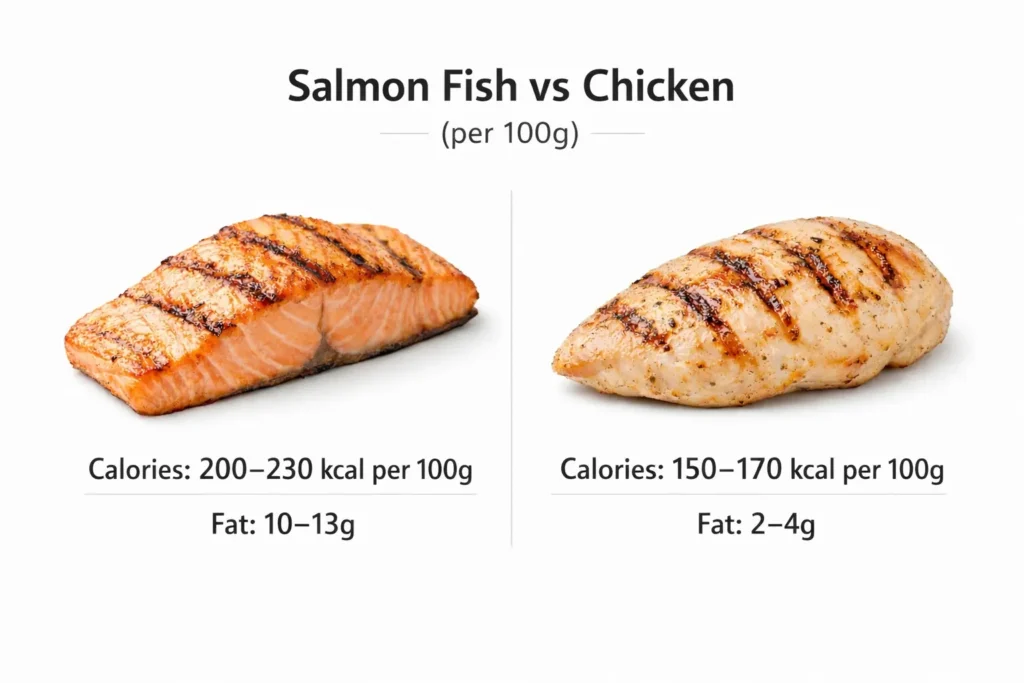
To add some context, fatty fish like salmon contain roughly 10 to 13 grams of fat per 100 grams, much of which comes from unsaturated fats. In contrast, skinless chicken breast is much leaner, usually providing around 2 to 4 grams of fat per 100 grams when cooked. This is why salmon is often chosen for its fat quality, while chicken breast is preferred when the goal is lower overall fat intake.
In the context of heart health
When it comes specifically to heart health, fish has a slight advantage. The omega-3 fatty acids found in fish, such as EPA and DHA, are considered heart-friendly. This is why doctors often recommend cutting back on red meat and including fish in the diet.
Chicken is also not problematic for heart health, especially when lean cuts are used and frying is avoided. The difference isn’t significant, but fish has gained a more positive image due to long-term research.
Also read: Is fish healthier than meat?
Which is better for weight loss?
The primary factor in weight loss is calorie control. White fish and skinless chicken breast are both low-calorie, high-protein options. If portion size is controlled, both can comfortably fit into a diet plan.
To give a clearer picture, calorie content also differs slightly between fish and chicken. Most white fish varieties provide around 90 to 120 calories per 100 grams when cooked. Skinless chicken breast usually falls a bit higher, offering roughly 150 to 170 calories per 100 grams. While chicken is slightly more calorie-dense, the difference is manageable with portion control, which is why both foods work well in weight-loss-focused diets.
Fatty fish like salmon have slightly more calories, usually around 200 to 230 calories per 100 grams, but they are also nutrient-dense. This is where personal goals matter. Lean chicken may seem like a slightly easier choice for a strict calorie deficit, but fish can be equally useful in a balanced approach.
Digestibility and feeling of fullness
Many people find fish to be light on the stomach, especially when compared to heavier meats. Chicken is also generally considered easy to digest, but some people find fish to be a bit lighter.
From a satiety perspective, both are protein-rich foods, so both can provide long-lasting fullness. Personal experience often matters more here, as individual responses vary.
Also check: Is fish meat or seafood?
Impact of cooking method
This is the most important factor in comparison that people ignore. Comparing fried chicken and grilled fish is not fair. Similarly, comparing fried fish and grilled chicken will also have distorted results.
If both are prepared using simple cooking methods, like grilling or baking, then the difference appears realistic. The label of “healthy choice” does not depend only on the ingredients; the preparation style is also equally important.
Cost and practicality
Chicken is usually affordable and widely available. Fish can be expensive in some regions, especially fresh varieties. A long-term diet is sustainable when it is practical in terms of budget and availability.
If someone cannot afford fish every day, it does not mean their diet is unhealthy. Lean chicken can also be a balanced protein source. Health should not be judged only by the ability to eat premium foods.
So, is fish healthier than chicken overall?
If the answer is given directly, fish may have a slight edge in many situations, especially because of its heart-related benefits. But this does not mean chicken is an unhealthy choice. Lean, properly cooked chicken can still be part of a balanced diet.
The comparison is not extreme. Both foods are nutritious, both are protein-rich, and both can be included smartly. The real difference lies in how balanced the overall diet is.
Final verdict
So when someone asks if is fish healthier than chicken, the honest answer is that it depends on context. If the focus is on heart health, fish may be a slightly better choice. If the focus is on lean protein and affordability, chicken is a practical and effective option.
The best approach isn’t to choose one food permanently. Maintaining variety is more realistic and sustainable. Including both fish and chicken in a balanced way is a smarter decision for long-term health.