

Feeling overwhelmed isn’t a discipline problem. It’s what happens when your mind is carrying more information, pressure, or uncertainty than it can sort through at once. Tasks start to feel heavy, unclear, or emotionally loaded, and your nervous system responds by pulling away. That pullback often why you start procrastinating, even on work that matters.
When you keep delaying work that actually matters to you, overwhelm is usually the real cause hiding underneath.
This article breaks down why overwhelm pushes you into avoidance and shows how to interrupt that cycle in a practical, realistic way—without forcing motivation or relying on willpower tricks.
The psychology behind overwhelm and procrastination
Procrastination is rarely about laziness. Most of the time, it is a response to emotional overload.
When a task feels too complex, uncertain, or significant, the mind reads that uncertainty as a threat. Not a physical danger, but the discomfort of not knowing what will happen next. Faced with that discomfort, the brain chooses what feels safer. It prefers familiar stress over unpredictable outcomes.
As overwhelm builds, cognitive load increases. Cognitive load refers to how much mental effort your mind is using at one time. Once that load crosses the limits of working memory, clarity begins to collapse. Thinking feels heavier. Decisions slow down. You feel mentally stuck.
At that point, starting imperfectly feels harder than delaying altogether. Postponing the task reduces immediate tension, even if only briefly. The mind registers that relief and remembers it. Over time, delay becomes the default response, and procrastination turns into a learned habit.
Making the task smaller without making it meaningless
One of the most effective ways to lower overwhelm is to reduce where you begin, not what you are aiming for. The goal stays intact. Only the entry point changes.
When a task feels vague or undefined, the mind experiences it as endless. There is no clear edge to start from. Instead of trying to hold the entire project at once, shift your attention to the first visible action. Not finishing the chapter, just writing the opening paragraph. Not delivering the full presentation, just sketching three core points.
Once movement begins, uncertainty fades. Engagement replaces anticipation. This is why so many people find that starting feels far more difficult than continuing.
Action works because it lightens cognitive load. The mind stops simulating everything that could happen and begins responding to what is actually happening. That shift from imagining to executing is what breaks the feeling of being stuck.
Separating planning from doing
Overwhelm often shows up when planning, creating, and judging are happening all at once. Trying to decide what to do, produce the work, and evaluate its quality in the same moment creates unnecessary mental strain.
A simple way to reduce that strain is to separate these roles. Give planning its own short window. Use it to outline the structure, list the steps, and decide what needs to happen next. When that time ends, shift fully into execution and focus on completing a single, clearly defined action.
During execution, avoid constant reassessment. You are not refining or judging yet. You are only moving forward. Once evaluation is removed from the moment of action, the task feels lighter, clearer, and far more manageable.
Also read: The Hidden Cost of Constant Self-Improvement: When Growth Turns Into Pressure
Reducing decision fatigue
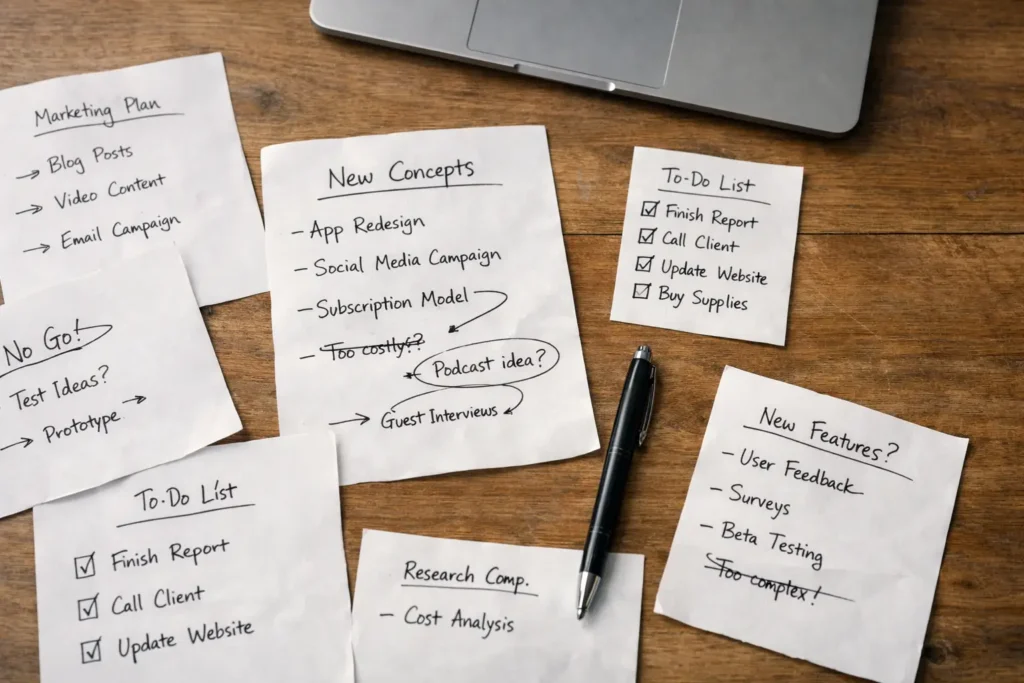
Overwhelm grows when too many small choices compete for attention. What time to begin? Which part to start with? Where to work. How long should it take? Each unanswered question adds weight before any real work even begins.
Every decision pulls from a limited supply of mental energy. When those choices are left for the moment you sit down to work, resistance naturally rises.
The solution is to decide earlier. Choose your work time in advance. Prepare what you need beforehand. Define the first action so clearly that no thinking is required. When you start, there is nothing left to negotiate.
With fewer decisions in the moment, starting feels simpler. Structure removes friction and allows attention to move straight into action.
Addressing the emotional layer directly
Sometimes the task itself isn’t what creates resistance. It’s the meaning you’ve attached to it.
You might worry that your effort won’t measure up and fear that starting will expose limits in your ability. You might believe that giving your full effort and failing would confirm something you’d rather not face about yourself.
When these fears stay unspoken, they quietly intensify and overwhelm. When you name them clearly, they stop blending into the task and become specific problems you can address.
In many cases, procrastination isn’t protecting your time at all. It’s protecting your sense of identity.
Rebuilding momentum through completion
Overwhelm slowly erodes self-trust. After enough delays, it becomes easy to doubt your ability to follow through on what you start.
Restoring that trust doesn’t require big pushes or effort. It comes from consistently finishing small, realistic commitments. Choose tasks you can genuinely complete. Each completion becomes quiet evidence that you are capable of starting and finishing what you set out to do.
Momentum builds from proof, not pressure. Confidence grows through repetition, not intensity.
Also read: How to Stop Overthinking and Start Taking Action
When overwhelm signals something larger
If overwhelm shows up across several areas of your life, the issue may go beyond task management. Ongoing stress, unrealistic expectations, insufficient rest, or unclear priorities can all play a role.
In situations like this, productivity techniques alone won’t solve the problem. It may be necessary to reduce commitments, create more space for recovery, or step back and reassess direction.
Sometimes overwhelm isn’t a sign that you need to work harder or organize better. It’s a signal that the demands you’re carrying exceed your current capacity.
A more practical perspective
Procrastination isn’t a sign of incapability. It’s a predictable response to uncertainty and mental overload. When a task feels too large or emotionally charged, hesitation is a natural outcome.
What helps in these moments is not pushing for more motivation. It’s creating clearer structure and choosing smaller, more manageable entry points.
When the first step feels doable, action becomes possible. And once action begins, overwhelm often eases without needing to be forced away.