

Whenever you experience a dream, whether good or bad, the very first question that might cross your mind is this: Do dreams come true, or are they simply a product of our thoughts and imagination? It’s a question that lingers, especially when a dream feels too real to ignore.
This question has been asked for a long time, and different traditions have tried to answer it in their own ways. In Indian tradition, dreams are not all treated the same—some are seen as ordinary, while others are believed to carry deeper meaning depending on time, situation, and context.
Do Dreams Come True Based on Time and Tithi (Lunar Day)??
In Indian tradition, both the time and the tithi (lunar day) at which a dream is seen are considered important. Dreams seen at different parts of the night on different tithis are not given the same importance, and this is often used to understand whether a dream is likely to come true or not.
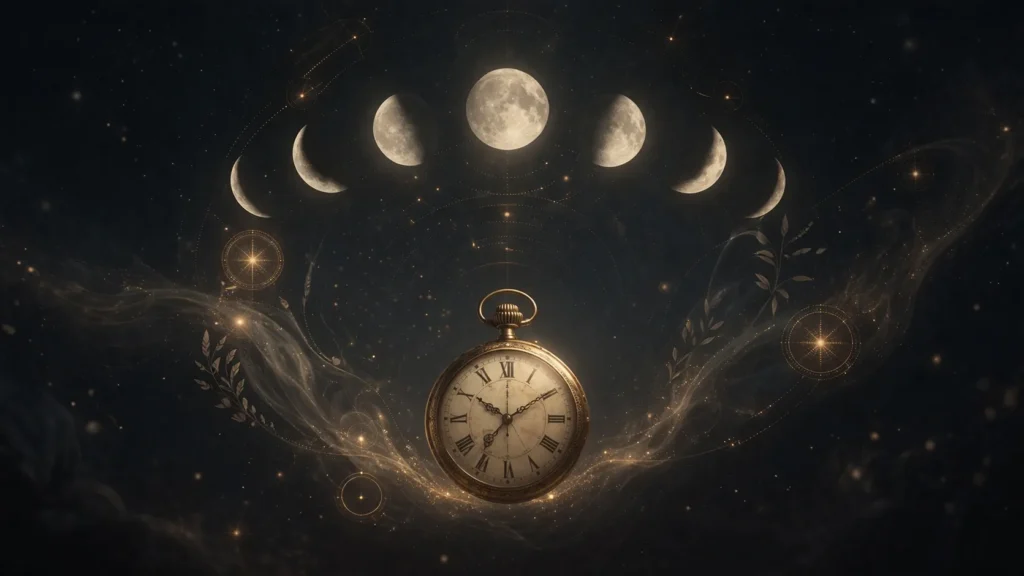
This understanding is further divided into two phases of the lunar cycle: Shukla Paksha and Krishna Paksha. Each phase follows its own pattern, and the meaning of dreams is interpreted differently within them. This is why the same type of dream can carry a different outcome depending on the phase and the tithi on which it is seen.
Shukla Paksha (The Waxing Phase of the Moon):
- Pratipada (first day): Dreams seen on Pratipada (the first day) are considered positive, though their results may come after some delay.
- Dwitiya (second day): Dreams seen on the second day are considered opposite in nature. If you see something good or bad happening to someone else in the dream, it happens to you in real life. And if you see it happening to yourself, it happens to someone else instead.
- Tritiya (third day): Dreams are believed to come true.
- Chaturthi (fourth day): Results may appear after a long gap, from a few months to even years.
- Panchami (fifth day): Dreams seen on the Panchami may bring results to some extent and can be realized within six months to three years.
- Shashthi (sixth day): Dreams are less likely to come true.
- Saptami (seventh day): Not always successful; it is often advised to keep such dreams private.
- Ashtami (eighth day): Dreams on the eighth day are believed to come true.
- Navami (ninth day): generally comes true and may reflect in real life.
- Dashami (tenth day): Dreams occurring on the Dashami frequently come true.
- Ekadashi (eleventh day): Results may come, but with a delay.
- Dwadashi (twelfth day): Results are delayed significantly.
- Trayodashi (thirteenth) and Chaturdashi(fourteenth day): Dreams are considered ineffective.
- Purnima (Full Moon day): Dreams on Purnima are believed to come true.
Krishna Paksha (The Waning Phase of the Moon)
- Pratipada (first day): Dreams are considered ineffective.
- Second day: May bring results, though not every time.
- Third day: Results may appear, but usually after a delay.
- Fourth and fifth day: Tend to give quick results.
- Sixth day: Dreams on the sixth day are generally ineffective.
- Seventh day: May bring both good and bad outcomes.
- Eighth and ninth day: Dreams on this day may reflect outcomes for both yourself and others.
- Tenth and eleventh day: Generally seen as ineffective.
- Twelfth day: Dreams on Dwadashi (twelfth day) may give results after a delay.
- Thirteenth day: Ineffective and may lead to negative outcomes.
- Fourteenth day: Often gives results, though not always favorable.
- Amavasya (new moon day): considered false and may sometimes lead to negative outcomes.
When Do Dreams Yield Results?
According to traditional beliefs, the outcome of a dream also depends on the time at which it is seen:
- A dream seen during the first quarter of the night (around 9:00 PM to 12:00 AM) may take a long time to come true, sometimes even up to a year.
- If it appears later, between midnight and 3:00 AM, the result may come sooner, often within a year.
- Dreams that come close to early morning, around 3:00 AM to 5:00 AM, tend to show results much faster, often within a few months.
- When a dream is seen just before waking, between 5:00 AM and 6:00 AM, it is said to come true within a couple of weeks.
- Dreams seen during Brahma Muhurta (around 4:00 AM to 5:30 AM) are considered even more immediate, sometimes showing results within just a few days.
There is also a common belief that if you go back to sleep right after seeing a dream, its effect may not remain the same.
Even the season is said to matter: dreams seen during spring are often more likely to come true, while those during the rainy or winter seasons are usually considered less effective.
Who Sees Dreams That Come True
So far, the focus has been on time and tithi. But in Indian tradition, the nature of the person is also considered important. Not every dream is judged in isolation—the mindset, behavior, and inner state of the individual are also taken into account.
According to traditional belief, dreams seen by a truthful and well-natured person are more likely to come true. It is said that when a man sleeps on his right side and a woman on her left, the chances of such dreams becoming real increase.
People who feel happiness in helping others, who are self-controlled, and who do not take pleasure in others’ suffering are often said to see dreams that come true more frequently. In the same way, if the mind is calm and clear before sleep, and the body is at rest, the dreams seen during that state are considered more meaningful and more likely to be fulfilled.
When Dreams Lose Their Value
At the same time, certain conditions are also believed to affect whether a dream holds any value or not. In such situations, dreams are seen as unreliable and are not expected to come true.
For example, dreams seen by an unwell person are usually ignored. In the same way, dreams that appear during the day are not given much importance. Even the condition in which you sleep matters—if the surroundings are unclean or uncomfortable, the dream is often seen as lacking meaning.
The position of the body is also taken into account. It is said that when a man sleeps on his left side or a woman on her right, such dreams are less likely to hold any value.
Beyond this, the nature of the person plays a major role. Dreams seen by someone who is driven by desire, selfishness, anger, grief, or dishonesty are often considered unreliable and unlikely to come true.
Guidelines Around Sharing Dreams
Along with interpretation, certain guidelines are also followed regarding what should be done after seeing a dream. It is generally advised not to share a dream with everyone. Instead, it is considered better to keep it to yourself or share it only with someone wise or knowledgeable.
Dreams are not usually shared with children or those who do not take such matters seriously. Seasonal beliefs are also connected to this—during the rainy and winter seasons, sharing dreams is often avoided, while in spring, it is considered acceptable to share them with the right person.
There is also a simple practice associated with good and bad dreams. If a dream feels positive, people turn to prayer with the hope that it comes true. If the dream feels negative, the same prayer is made with the intention that it does not happen.
Are Traditional Dream Interpretations True?
In India, dream interpretations have been followed for generations, and many people still take them seriously. In some cases, they do seem to connect with real situations, which is why these beliefs continue to hold importance.
At the same time, not every interpretation works in the same way for everyone. What feels accurate in one situation may not apply in another. If you look deeper, the real meaning of your dreams is not always what you think, and it often depends on your own thoughts and experiences.
Because of this, these meanings are better seen as part of a traditional understanding of dreams, not something fixed that will always turn out exactly the same.
Final Thoughts
Dreams are not something that should be taken as exact or fixed. The question of do dreams come true does not have one clear answer—sometimes they connect, sometimes they don’t.
It makes more sense to look at them for what they are, instead of trying to force a meaning every time. Some dreams may reflect what’s going on in your mind, while others may not really matter.