

Some of the heaviest days in my life have not been busy ones. They have been the days without plans, when nothing was scheduled. No meeting, no task, no deadline, no reason to hurry. From the outside, these days should feel light. They are supposed to be free. But inside, they often feel strangely heavy.
Time stretches. Hours lose shape. I wake up without resistance, yet something already feels unsettled. Not because anything is wrong but because nothing is holding the day in place. A day without plans does not feel empty. It feels loose. And that looseness is what makes it harder to move through.
When Time Has No Edges
A planned day has invisible borders. There is a before and after to everything. Morning leads to something. Afternoon moves toward something else. Even rest is framed by what came before it and what will come next.
On days without plans, those edges disappear. Time does not point anywhere. It spreads out instead of moving forward. I notice my attention drifting more easily. Not because I am distracted, but because nothing is anchoring it. There is no direction for awareness to lean into.
Without edges, even small moments feel oddly unfinished. Breakfast does not lead anywhere. Sitting does not transition into anything. The day becomes a long, open middle.
The Quiet Pressure to Use the Day
Even when nothing is required, something still feels expected. Not by anyone else on the day itself. There is a subtle pressure to make the time count, even when no one is watching. It doesn’t arrive as a clear demand or a voice in my head. It shows up as a low hum of unease, like time itself is waiting for justification.
This pressure does not feel motivating. It feels vague. I am not being pushed toward a specific task, but I am being pulled away from stillness. The unplanned day keeps asking silently, What are you going to do with me? And when there is no answer, the question remains suspended in the background.
Freedom Does Not Always Feel Light
Freedom is often described as space. But space without form can feel overwhelming. When there is too much openness, the mind does not know where to land.
A schedule, even a gentle one, gives time a shape. It creates reference points. Without those points, freedom stops feeling spacious and starts feeling uncontained.
I have noticed that I feel more tired on days when I do nothing than on days when I do something simple but defined. The difference is not effort. It is orientation. One day has a direction. The other does not.
Unplanned Time Exposes Mental Movement
When there is nothing to focus on, the movement of the mind becomes more visible. Thoughts begin to wander without purpose. Small worries appear. Random memories surface. The mind fills the silence because it does not know how to stay with it.
This is not restlessness. It is a search for footing. The mind is not trying to escape. It is trying to locate itself inside a day that has no clear structure. On planned days, this movement is hidden beneath activity. On unplanned days, it floats to the surface.
Waiting Feels Easier Than Nothing
Waiting has a shape. Even if it is boring, it has a direction. There is something coming. There is a before and after. The mind can relax into that.
Nothing, by contrast, has no arrival point. It does not end. It does not move forward. It just stays open. And open time requires more attention than structured time ever does.
This is why an empty day can feel heavier than a busy one. Not because it demands work but because it offers no boundaries. Without edges, time does not carry itself forward. Attention has to hold it instead.
The Body Responds to the Lack of Structure
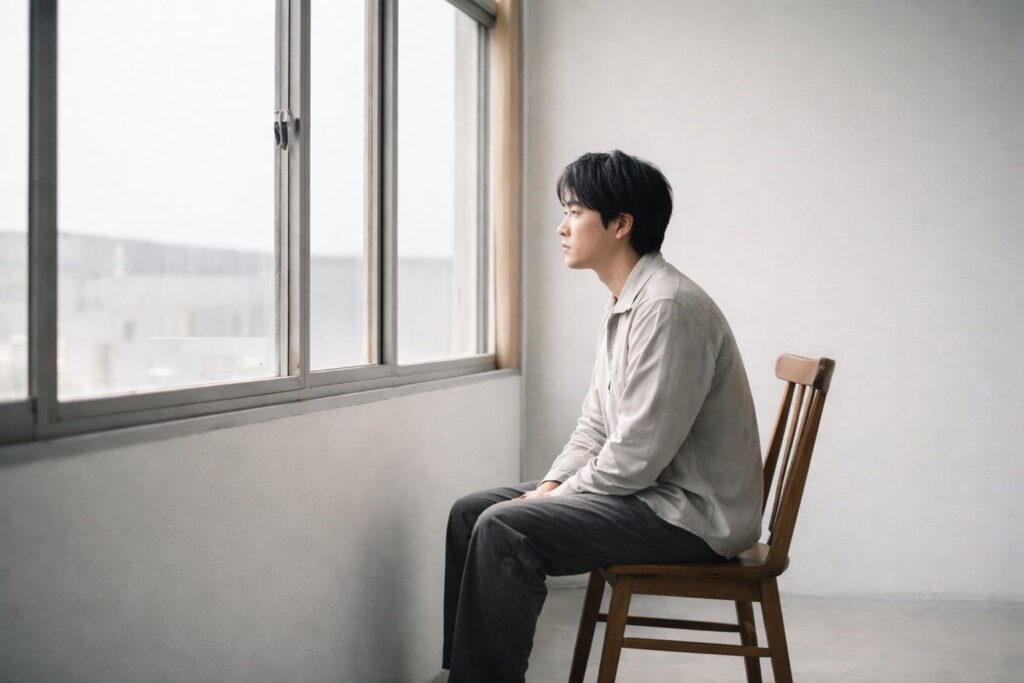
I have noticed that on days without plans, my body slows down. Not in a peaceful way. In a waiting way. It feels like it is holding itself in pause, as if expecting instruction that never arrives.
Movement feels unnecessary. Rest feels incomplete. Even sitting does not feel like sitting; it feels like stalling. The body is not tired. It is unassigned. It waits, not for rest, but for a reason to move.
The Hidden Work of Deciding What to Do
The Hidden Work of Deciding What to Do
On an unplanned day, every action must be chosen. Nothing is automatic. Even small things require a decision.
Do I read?
Do I rest?
Do I go outside?
Do I do nothing?
Each choice carries weight because it sets the direction of the day. That constant deciding creates a background strain that busy days do not have. On busy days, the next step is already known. On free days, the next step must be invented. That invention takes energy.
Doing Nothing Is Not the Same as Rest
Doing nothing sounds restful, but without structure, it rarely is. True rest usually happens inside some kind of frame after effort, before something else, within a pause that has limits.
When nothing is planned, rest has no container. It becomes shapeless. And shapeless rest feels like drifting, not recovering. There is no clear moment where the body knows it is allowed to fully let go.
The day does not give permission to stop. It simply offers endless space. And endless space does not automatically feel safe. Without boundaries, attention stays alert instead of settling.
The Weight of a Day That Goes Nowhere
An unplanned day can feel long without being full. Hours pass, but nothing feels completed. There are no chapters. No transitions. Just time moving without landmarks.
At the end of such a day, I often feel more tired than expected. Not from what I did but from how the day moved. Or rather, how it didn’t. A day that goes nowhere quietly accumulates weight.
Days without plans are not hard because they ask too much. They are hard because they ask nothing at all. Without structure, time loses its shape, and the mind loses its footing inside it.
What remains is not freedom, but openness without direction. And moving through that openness, hour after hour, takes more energy than most people realize.
Sometimes, the lightest-looking days are the ones that carry the most invisible weight.