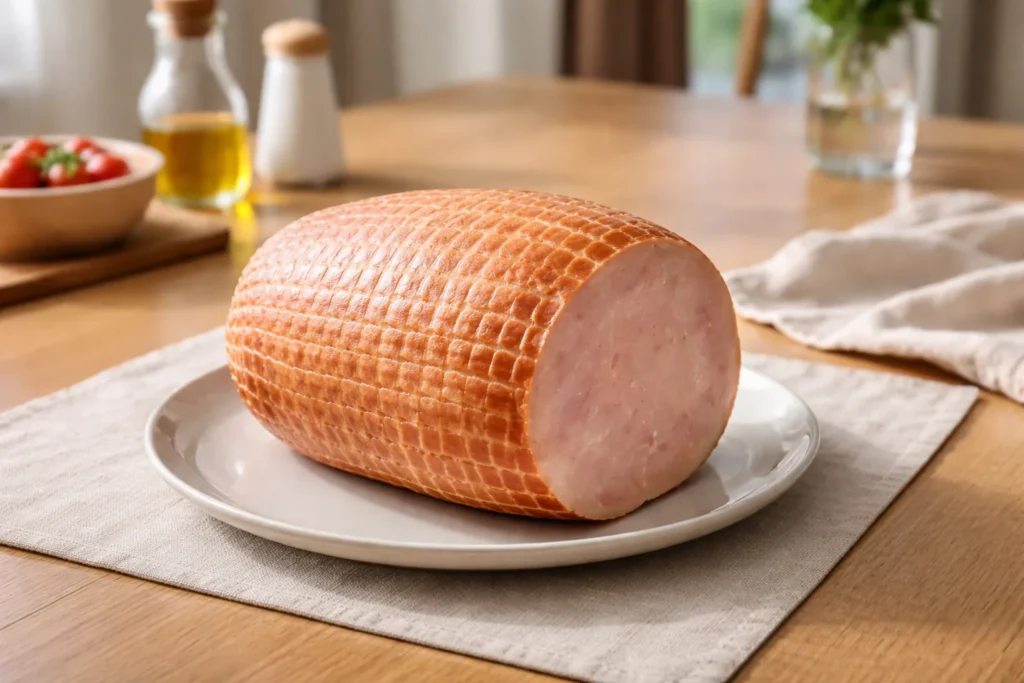
Deli meat is a common part of sandwiches, wraps, and quick meals, but many people pause when they see it labeled as “processed.” The word often sounds negative, yet it is rarely explained clearly. To understand what processed deli meat actually means, it helps to look at how it is made and how it fits into everyday eating.
This article explains what processed deli meat actually is, how it differs from fresh meat, and what matters most when choosing it.
Table of Contents
What “processed meat” really means
Processed meat is not a marketing term. It refers to meat that has been changed from its original raw form to improve shelf life, safety, or convenience. This can include actions such as curing, smoking, cooking, seasoning, or slicing.
Processing exists on a wide range. Some foods are lightly processed, while others go through multiple steps. Processing itself does not automatically make food unsafe or low quality. It simply describes how much the original product has been altered before reaching the consumer.
When deli meat is described as processed, it means the meat has been cooked, seasoned, preserved, and prepared for ready-to-eat use.
Is deli meat considered processed meat?
Yes, deli meat is considered processed meat.
Deli meat is made by taking whole cuts of meat, grinding or shaping them, seasoning them, cooking them, and packaging them for storage and slicing. These steps place deli meat in the processed category.
This applies to common deli meats such as ham, turkey slices, roast beef, salami, bologna, and chicken loaf. Even deli meat labeled as “natural” or “uncured” still goes through processing steps, though the ingredients and methods may differ.
How deli meat is processed
Most deli meats follow a similar production path.
First, the raw meat is trimmed and prepared. Depending on the product, it may be ground, formed, or left in larger pieces. Salt, seasoning, and sometimes curing agents are added. The meat is then cooked or smoked to make it safe to eat.
After cooking, the meat is cooled, packaged, and sliced. Packaging is designed to slow spoilage and maintain freshness during transport and storage. These steps make deli meat ready to eat without further cooking, which is its primary purpose.
Difference between processed deli meat and fresh meat
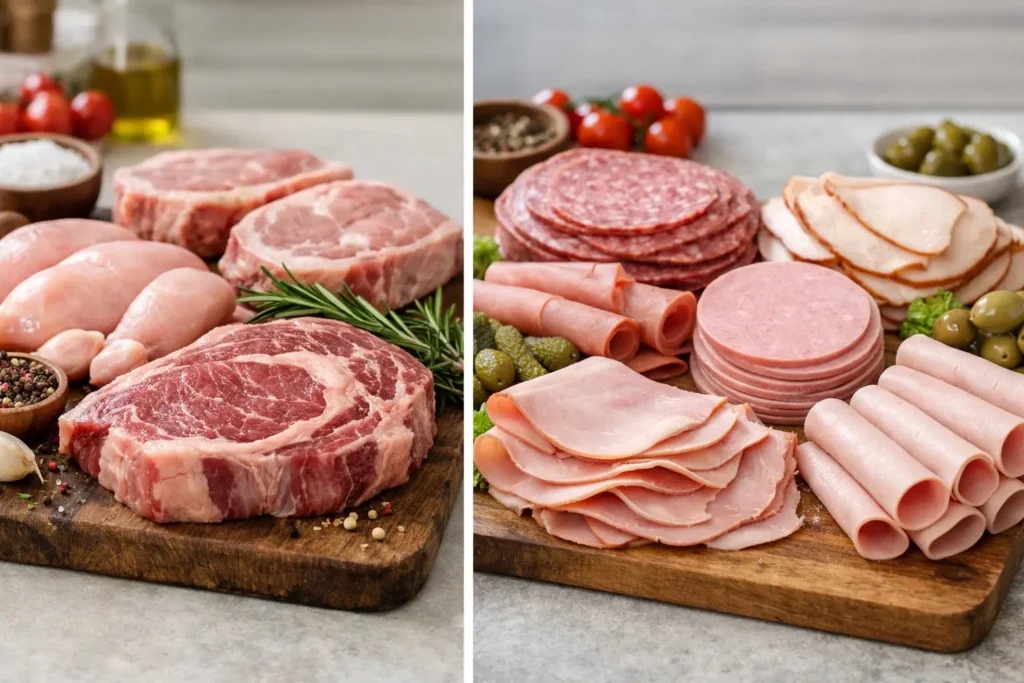
Fresh meat refers to raw cuts that have not been cooked, cured, or preserved. A fresh chicken breast or raw beef roast falls into this category.
Deli meat differs because it has already been cooked and preserved. This changes texture, shelf life, and convenience.
Fresh meat requires cooking before eating and spoils more quickly. Deli meat, by contrast, is ready to eat and lasts longer when stored properly. The trade-off is that deli meat usually contains added salt and preservatives to maintain safety and flavor.
For storage timelines and freshness, see our guide on how long deli meat is good for.
Are all deli meats processed the same way
Not all deli meats are processed to the same degree.
Some products are heavily processed, meaning the meat is finely ground, reshaped, and combined with stabilizers. Examples include bologna and some sandwich loaves.
Others are more lightly processed. Whole-muscle deli meats, such as sliced roast turkey or roast beef, keep much of the original meat structure and use fewer additives.
The ingredient list is the best way to understand how much processing a specific deli meat has undergone.
Does processed mean unhealthy
“Processed” does not automatically mean “unhealthy.”
The health impact of deli meat depends on factors such as sodium content, portion size, frequency of consumption, and overall diet. Some deli meats are high in salt, which can be a concern when eaten often. Others may contain preservatives that some people prefer to limit.
At the same time, deli meat provides protein and can fit into a balanced diet when consumed in moderation. The issue is not processing alone, but how often and how much deli meat is eaten.
If you want a deeper breakdown of the health concerns, read our full article on is deli meat bad for you and What Is the Healthiest Deli Meat.
What to look for when buying deli meat
When choosing deli meat, reading the label tells you more than the name on the package.
Look for products with:
- shorter ingredient lists
- clear meat identification
- lower sodium levels
- minimal added sugars
Whole-cut deli meats usually have simpler ingredient lists than highly formed products. Pre-sliced packaged meats often list exact ingredients, which makes comparison easier.
Is deli meat different from cured meat
Some deli meats are cured, but curing and deli meat are not the same thing.
Curing refers to the use of salt or curing agents to preserve meat. Ham and salami are cured meats commonly found at the deli counter. Roast turkey deli meat is cooked but not cured in the traditional sense.
Cured meats are a subgroup within processed meats. Deli meat includes both cured and cooked products.
Why deli meat is popular despite being processed
Deli meat is popular mainly because it makes everyday eating easier. It saves time, requires no cooking, and lets people put together meals quickly. For many households, it also offers predictable portions and consistent results, which fresh meat does not always provide. Its popularity comes from convenience and routine, not from a lack of awareness about how it is processed.
Final thoughts on deli meat and processing
Deli meat is considered processed because it is cooked, preserved, and prepared to be eaten without additional cooking. That does not automatically make it unsafe or low quality, but it does mean ingredients and portion size matter.
Understanding what “processed” actually means helps clear up a lot of unnecessary fear. What matters more is choosing better options, reading labels, and treating deli meat as just one part of a balanced diet.