Many people ask whether fish is meat or seafood because they hear different answers in different situations.
The clear answer is this: biologically, fish is meat because it is animal flesh, but in food and everyday use, it is usually classified as seafood.
This confusion exists because the word “meat” is used differently in science, diet rules, culture, and religion.
Below, we explain exactly why fish can be called both meat and seafood.
Biological and Food Classification of Fish
From a biological point of view, fish is meat because it is animal flesh. Scientifically, meat means the flesh of an animal, and fish clearly fits this definition.
At the same time, fish is classified as seafood in cooking, food labeling, and everyday use.
Because of this difference, the answer depends on how the word “meat” is being used.
Read more: Is fish healthier than chicken?
Explanation
In biology, meat means the flesh of any animal according to the definition of meat. By this definition, fish flesh is technically meat, just like chicken or beef.
In food culture and everyday language, meat typically refers to flesh from land animals, such as cows, goats, pigs, or chickens. That is why many people do not think of fish as meat.
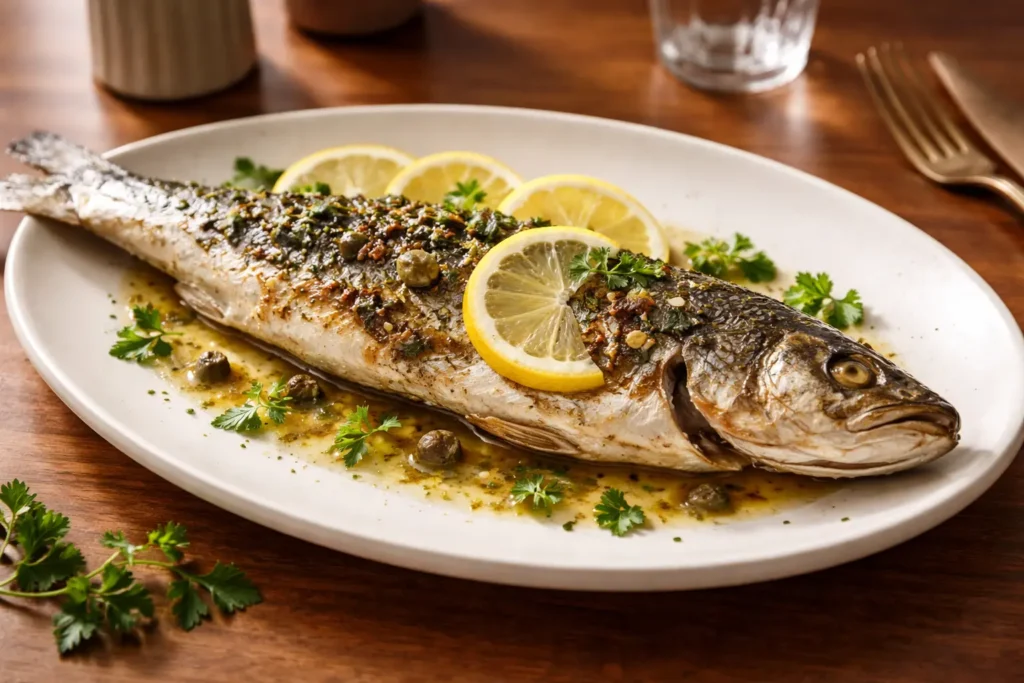
Fish and shellfish are placed in a separate category called seafood. Fish like salmon, tuna, and cod are seafood. Shellfish like shrimp, crab, and clams are also seafood. This is how grocery stores, restaurants, and food guides organize them.
Because of this food-based classification, people who say, “I don’t eat meat, but I eat fish” are usually understood without any problem. They are saying they avoid land-animal meat but include seafood in their diet.
This is why both answers exist, even though the food-based definition is more practical and commonly used within a broader view of meat.
You can also read, is fish healthier than meat?
Why People Get Confused
One reason people get confused is language. The same word can mean different things depending on context. When someone uses “meat” in a scientific way, fish fit the definition. When they use it in a food or cultural way, fish usually do not.
Another reason is religion and tradition. In some cultures, fish is allowed on days when meat is not. This makes people think fish must not be meat at all. In reality, it is treated as a separate food group for practical and symbolic reasons.
Diet labels also add confusion. Terms like “vegetarian,” “pescatarian,” and “non-vegetarian” are used differently around the world. Some people hear “non-vegetarian” and assume it includes fish, while others think it only means meat from land animals.
Finally, grocery stores and menus reinforce the seafood label. When people always see fish under “seafood,” they naturally stop thinking of it as meat.
Similar food classification confusion also exists with land animals, such as lamb, which we explain in our article on whether lamb is red meat or white meat.
FAQ
Is fish considered meat in science?
Yes. In biology and nutrition, fish is considered meat because it is animal flesh and muscle tissue.
Is fish meat or seafood?
Fish is both. It is meat biologically, but it is classified as seafood in cooking and food industries.
Do vegetarians eat fish?
No. True vegetarians do not eat fish. People who eat fish but avoid other meats usually follow a pescatarian diet.
Is fish white meat or red meat?
Fish is generally classified as white meat because of its muscle structure and lower myoglobin content compared to red meat.
Conclusion
Even though fish is biologically meat, many people still do not think of it that way.
Everyday habits and food labeling strongly shape how people understand food.
Because fish is consistently placed under “seafood” in stores and menus, it gradually stops being associated with meat.
Cultural and religious traditions reinforce this separation, as fish is often allowed in diets that restrict meat.
As a result, the seafood label often feels more natural than the scientific definition.