

There are moments when nothing is required of me, yet my mind feels restless. Time opens up, but instead of settling into it, attention keeps moving without direction. The quiet does not bring ease right away. It only makes something more noticeable. The mind needs structure even when nothing is required, and without it, stillness starts to feel uneasy rather than calm.
I used to think this discomfort meant I was bad at resting. That I didn’t know how to “switch off.” But over time, I noticed something else. The unease didn’t come from effort or exhaustion. It came from a lack of shape. When nothing is required, the mind doesn’t automatically relax. It loses its reference points.
When Nothing Is Expected, the Mind Doesn’t Relax
When external expectations disappear, the mind does not follow them into stillness. It stays alert. It looks for cues that are no longer there. During busy periods, my thoughts align themselves around tasks without me noticing. There is a next step, a sequence, a direction. When those disappear, the mind doesn’t stop. It simply starts wandering without a map.
This wandering feels subtle but tiring. Thoughts don’t land anywhere long enough to feel complete. They move from one half-formed idea to another, not because they are important, but because there is nothing else to organize attention. The absence of pressure doesn’t bring calm. It brings drift.
Why the Mind Needs Structure as a Silent Reference Point
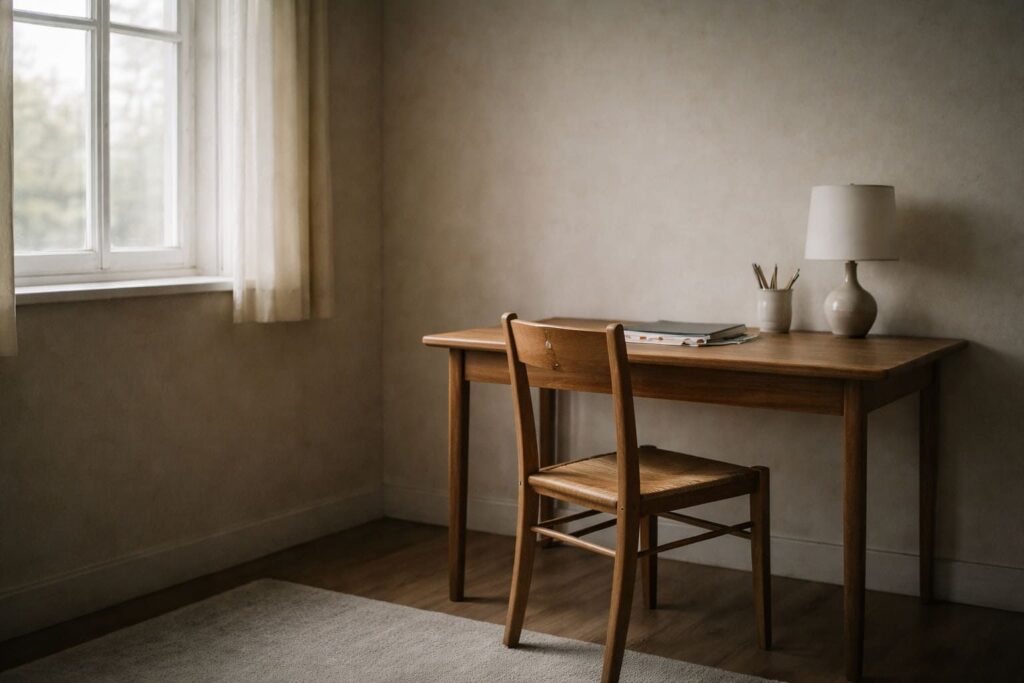
Structure rarely announces itself when it’s present. I don’t usually think about routines while I’m inside them. I only notice structure when it’s gone. It functions like a background grid that keeps attention focused without demanding conscious awareness. When that grid disappears, even simple moments lose their clarity.
Structure doesn’t have to mean schedules or productivity. Sometimes it’s just knowing where the day begins and ends. Sometimes it’s the role I’m occupying in a given moment. Even waiting for something provides a kind of shape. There is a before and an after. When none of that exists, time feels wide but unsupported.
Free Time Isn’t Empty Time
Free time sounds like a blank canvas, but it rarely behaves that way. When time opens up without boundaries, it doesn’t become empty. It becomes undefined. Attention tries to fill that undefined space, not with meaningful activity, but with motion. Scrolling, checking, pacing thoughts these aren’t choices as much as reactions.
I’ve noticed that free time without structure feels heavier than time that is gently contained. Not because it asks more of me, but because it asks nothing at all. Without edges, attention doesn’t know where to rest. It keeps hovering, alert without direction. The weight comes from holding open space without any frame to support it.
The Unease of Open Space
There is a particular discomfort that comes from open stretches of time. Not boredom, exactly. Boredom has a direction; it points outward. This unease points inward. It’s the feeling of standing in a wide field without landmarks. There’s room to move, but no indication of where movement would make sense.
The mind doesn’t respond well to infinite openness. It prefers some kind of orientation, even a loose one. Without it, thoughts circle back on themselves. The body slows down, not from rest, but from uncertainty. Movement feels unnecessary, not because energy is gone, but because direction is missing. Stillness arrives early, before anything has had a chance to settle.
Why the Mind Keeps Creating Invisible Tasks
In the absence of structure, the mind often invents substitutes. Small, unnecessary tasks appear. Checking things that don’t need checking. Replaying conversations. Planning scenarios that aren’t urgent. These aren’t signs of productivity or anxiety. They feel more like attempts to restore a sense of order when none is obvious.
The mind seems to crave some form of containment. When it can’t find it externally, it creates it internally. These invisible tasks don’t resolve anything, but they give attention something to orbit. Without them, the openness feels too exposed. Even a meaningless structure feels safer than none at all.
Structure Without Pressure
I used to associate structure with obligation. With performance. With having to be somewhere or become something. But structure doesn’t always arrive with pressure. Sometimes it’s simply a frame that holds time together, a way for attention to know where it is.
Structure doesn’t have to push. It can just orient. When it’s present, even loosely, thoughts don’t scatter as easily. The mind doesn’t need to constantly check where it stands. It knows. That quiet knowing reduces the need to fill time with unnecessary motion. Attention settles without being forced.
When Structure Fades, the Body Slows Instead
One of the strangest things I’ve noticed is how the body responds when the mind loses structure. The slowdown feels physical, but it isn’t caused by exertion. It’s more like the body is waiting for direction that never arrives. Movement feels unnecessary. Stillness feels incomplete.
This kind of fatigue isn’t cured by rest. It’s not a lack of energy. It’s a lack of orientation. The body mirrors the mind’s uncertainty. Without a sense of shape, both drift.
I’ve stopped interpreting this slowdown as a personal flaw. It isn’t laziness or resistance. It’s a response to an environment without reference points. When nothing is required, the mind doesn’t know where to land, and the body responds by pausing.
The Quiet Role of Structure
Structure doesn’t need to dominate life to matter. Its role is quieter than that. It doesn’t give meaning, but it gives placement. It tells the mind where it is in relation to time. Without that placement, even the absence of demand feels unstable.
I don’t think the mind needs structure to be productive. I think it needs structure to feel settled. Not because it wants to do more, but because it wants to know where it stands.
There are moments when nothing is required, and that should be enough. But often, without some form of structure, the mind doesn’t experience freedom. It experiences drift. And drift, over time, becomes tiring.
I’m still learning to notice this without trying to fix it. Just seeing how often unease appears not from pressure, but from its absence. How the mind looks for shape even when it doesn’t want responsibility. How structure, even minimal, quietly supports attention without asking for effort.
Sometimes, nothing being required is not the same as nothing being needed.