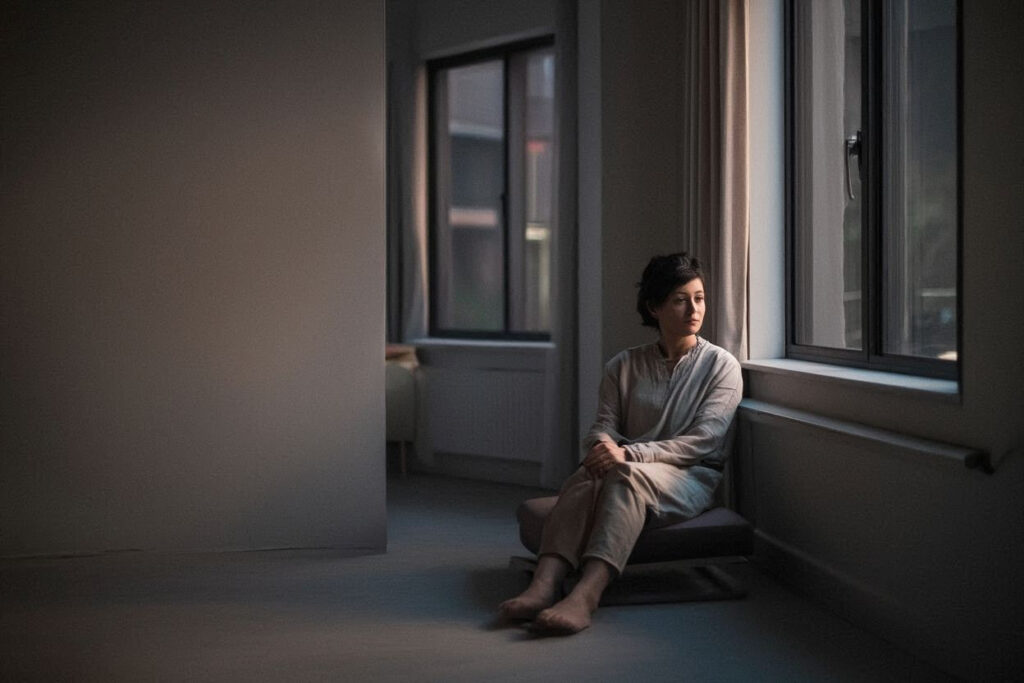

I used to assume that rest was automatic. If I weren’t doing anything demanding, then rest would happen by default. There was no reason to question it. The logic seemed simple: effort leads to tiredness, stopping removes effort, and the absence of effort should restore energy. For a long time, that assumption worked without friction.
But something shifted. I started noticing that even on days when nothing required much from me, I still felt heavy. There was no clear exhaustion, no physical strain, and no pressure to perform. Yet the body felt slow, and the mind felt oddly resistant. Sitting down didn’t refresh me. Lying still didn’t calm anything. The confusion wasn’t about being lazy; it was about why rest doesn’t feel like rest anymore.
This isn’t about burnout in the usual sense. It’s about a quieter problem that can still appear even in the absence of stress. A strange experience of resting without feeling restored.
Rest Used to Be a Clear State
Earlier, rest had a clear definition in my mind. It followed effort and contrasted with it. After a long day, stopping felt meaningful because something had actually ended. The body recognized the shift, and the mind followed along. Rest didn’t need explanation. It had a role, and that role was obvious.
Now that clarity feels weaker. Rest often happens without a clear transition. There isn’t always a moment where work truly ends. Instead, activity fades into inactivity without a mental signal that says, “This is rest.” Because that signal is missing, the system never fully switches modes. The body stops moving, but the internal tension remains. What used to feel like recovery now feels like suspension.
When the Body Stops but the Mind Doesn’t

One of the biggest changes I’ve noticed is that physical stillness no longer guarantees mental quiet. I can sit for hours without doing anything, yet the mind keeps moving. Thoughts don’t rush, but they drift endlessly. Unfinished ideas surface, small concerns repeat themselves, and attention jumps without settling anywhere.
This mental movement doesn’t feel productive, but it isn’t restful either. It exists in between. That constant low-level activity creates fatigue that sleep alone doesn’t resolve. The body may not be tired, but the mind never truly rests, and that imbalance leaves everything feeling heavier than it should.
I’ve explored this feeling more deeply in another piece.
Why Doing Nothing Often Feels Worse Than Being Busy
Busy days often feel easier than empty ones, and that used to confuse me. When there is structure, the mind knows what to focus on next. Even tiring work has boundaries. There is a beginning, a sequence, and an end.
Free time, on the other hand, can feel uncontained. Without structure, attention has nowhere to anchor itself. The day stretches without shape, and hours blur together. Instead of relaxing, the mind keeps scanning for something to engage with. This constant searching creates friction, even though nothing is demanding effort.
Passive Time Is Not the Same as Rest
I came to realize that doing nothing is not the same as resting. Passive time keeps the mind occupied without intention. Scrolling, waiting, or lying down without direction still engages attention, just without depth or closure.
That kind of attention use drains energy quietly. There is movement, but no resolution. Engagement without meaning. Activity without progress. After enough of that, the mind feels dull rather than refreshed.
Rest seems to need more than just stopping. It happens more easily when attention has somewhere to settle. Without that, stillness can feel empty rather than restorative. The body pauses, but the mind keeps searching.
The Hidden Pressure That Follows Us Into Rest

Another reason rest doesn’t feel like rest anymore is the subtle pressure to justify time. Even during rest, there is often an internal expectation to make use of the moment. To learn something, prepare something, or at least consume something useful.
This pressure doesn’t feel loud or aggressive, but it never fully disappears. It turns rest into a background negotiation. The mind stays alert, checking whether the time is being used well enough. That tension alone prevents genuine recovery.
Rest becomes conditional, and conditional rest rarely restores energy.
When Rest Loses Its Boundaries
Rest works best with clear edges. The start and end both matter. Without boundaries, the mind treats rest as uncertain. It doesn’t know how long it will last or what comes next, so it stays partially engaged.
This is why rest without structure often feels empty. It lacks containment. Even gentle structure, like deciding when rest begins and what it includes, changes how the nervous system responds. Structure doesn’t reduce freedom; it gives rest a shape the mind can trust.
The Mistake of Forcing Relaxation
For a long time, I tried to fix this by forcing myself to relax. That approach only made things worse. Trying to make rest effective turns it into another task. The moment rest becomes something to manage, it stops working naturally.
The problem wasn’t that rest had stopped working. It was that I was expecting it to behave the same way under different mental conditions. Once I stopped demanding results from rest, the experience softened. Rest didn’t suddenly feel amazing, but it stopped feeling frustrating.
Rest Isn’t Broken, Expectations Are
This realization shifted how I see it. Rest itself isn’t flawed. The context around it has changed. The amount of mental input, the lack of clear transitions, and the constant low-level engagement all affect how rest feels.
Rest is allowed to be quiet, slow, and even slightly uncomfortable at first, and it begins to work again. Not dramatically, but steadily. Without urgency, the body stops resisting the pause. The mind follows when it feels safe enough to do so.
Ending Thoughts
When rest doesn’t feel like rest, it is not a sign of weakness or laziness. It’s a response to mental conditions that no longer allow attention to settle easily. With nowhere clear for the mind to land, the body slows down instead of recovering.
Once I stopped treating rest as something that should automatically fix everything, it became easier to enter it honestly. Rest doesn’t always feel good. Sometimes it feels neutral. Sometimes it feels empty. But that doesn’t mean it’s failing.
It simply means rest now asks for clarity instead of absence, and permission instead of pressure.